

Complete E-commerce UI Guide: Trends and Tips for 2025
In e-commerce, first impressions are crucial. A polished design can turn a mere visitor into a loyal customer, especially in 2025, where competition is fiercer than ever.
UI e-commerce has become an essential lever to boost conversions, build trust, and stand out in a saturated digital landscape. A site with an effective interface captures attention and immediately inspires credibility.
This article offers a comprehensive guide to understanding and applying the UI e-commerce trends to follow in 2025. You will discover practical tips to optimize your online store, avoid common mistakes, and leverage the best tools on the market.
Throughout the sections, we will explore the definition of UI, major trends, optimization strategies, essential tools, and a sectoral focus. Ready to transform your interface and maximize your results thanks to a high-performing UI e-commerce strategy?
Understanding E-commerce UI: Fundamentals and Challenges
E-commerce UI represents the first point of contact between the brand and the user. Its role is crucial, as it shapes the visual and emotional experience from the moment they land on the online store. Understanding its fundamentals allows for optimizing brand perception and meeting the expectations of modern customers.
Definition and role of UI in e-commerce
E-commerce UI refers to all the visual elements with which the user interacts on a merchant site. These include menus, buttons, typography, colors, animations, and page structure.
Unlike UX, which covers the entire user experience, UI focuses on the appearance and clarity of the interface. Good e-commerce UI offers a reassuring first contact, reinforces credibility, and facilitates navigation. According to Sortlist, 75% of internet users judge a site's credibility by its design. Essential elements include visual consistency, intuitive navigation, and responsive display on all devices.
The impact of UI on conversion rate
Optimized e-commerce UI directly influences the conversion rate. Studies conducted by specialized agencies show that a UI redesign can lead to a sales increase of 30% to 98%. An effective design simplifies the customer journey, particularly during the purchasing process, which reduces cart abandonment.
The integration of micro-interactions, such as visual feedback when adding to the cart, encourages engagement. Moreover, 38% of visitors leave a site if the interface is not attractive. To learn more about the impact of design on performance, see Impact of UI design on conversion rates.
User expectations in 2025
Customers expect e-commerce UI to be mobile-first, fast, and accessible. In 2025, more than half of e-commerce traffic will come from mobile, making responsiveness essential.
Interfaces will need to offer personalized journeys, efficient searches, and intuitive navigation. Simplicity and authenticity will be sought after, as will transparency and security. Generation Z, with a strong online presence, sets high standards for immersion and a fluid experience. Thus, e-commerce UI must anticipate these trends to remain competitive.
UI vs UX: complementarity and synergies
E-commerce UI focuses on visual aspects, information hierarchy, and aesthetic appeal. UX, on the other hand, encompasses the entire journey, from user feeling to effectiveness.
To maximize conversions, it is essential that UI and UX are aligned. A site can be beautiful but difficult to use, or functional but visually outdated. The use of design systems, wireframes, and user testing allows for harmonizing both approaches. 70% of high-performing sites invest in this duo, highlighting the strategic importance of UI/UX synergy in the world of e-commerce UI.
E-commerce UI Trends to Follow in 2025
In 2025, e-commerce UI is undergoing a profound transformation, driven by increasing consumer expectations and technological innovation. Brands that anticipate these trends maximize their chances of converting, retaining, and differentiating themselves. Here is an overview of the essential trends to adopt to remain competitive.
Minimalism and visual clarity
E-commerce UI is increasingly focusing on minimalism. Clean interfaces highlight products, limit distractions, and improve readability.
White space is used to structure information and enhance visuals. Titles, CTAs, and strategic areas benefit from clear hierarchy.
- Clean design = +15% conversions
- Examples: fashion and beauty stores prioritizing minimalism
- Reduced animations to promote loading speed
This choice also favors SEO and site speed, two major assets for e-commerce UI.
Micro-interactions and intelligent animations
Micro-interactions enrich e-commerce UI by making the experience more intuitive and engaging. These are small animations or visual reactions during actions such as hovering, adding to a cart, or validating.
These details reassure, guide the user, and increase engagement.
- Animated add-to-cart, instant visual feedback
- Popular tools: Lottie, GSAP, Framer Motion
- 60% of users prefer an interactive site
It is essential that these animations remain lightweight so as not to impair the overall performance of the e-commerce UI.
Personalization and AI in UI
In 2025, e-commerce UI will be personalized thanks to artificial intelligence. Interfaces dynamically adapt to the user's profile, behavior, or purchase history.
We find:
- Personalized product recommendations
- Dynamic carousels based on preferences
- UI chatbots for real-time support
AI also enables automated A/B testing, continuously optimizing e-commerce UI. Personalization, while respecting privacy, increases the average cart value by 20% and strengthens customer loyalty.
Accessibility and inclusion by design
Accessibility is becoming a pillar of e-commerce UI. By adhering to WCAG 2.2 standards (contrasts, keyboard navigation, alternative text), brands open their store to 15% of the population with specific needs.
Best practices:
- Legible fonts, adjustable sizes
- Audit tools like Axe or Wave
- Clear labels for fields and buttons
Inclusion expands the customer base and improves brand image. For a more complete view of trends, consult UI/UX trends to watch in 2025 which highlights the rise of inclusive design and accessibility in e-commerce UI.
Mobile-first and omnichannel experience
E-commerce UI is resolutely moving towards mobile-first. More than 54% of e-commerce traffic will come from mobile in 2025, which requires interfaces designed for touch and fast navigation.
Key elements:
- Burger menus, sticky bars, accessible buttons
- Visual consistency across web, mobile, app, and social networks
- Innovative mobile features: swipe, quick buy
Mobile performance and the omnichannel experience are essential for competitive e-commerce UI.
Color palette and trending typography 2025
Colors and typography play a strategic role in e-commerce UI. In 2025, natural, pastel, or pop palettes adapt to the sector, while subtle gradients and depth effects gain ground.
- 80% of users associate color with the brand
- Custom typography for a strong identity and better readability
- Optimized contrast for accessibility
Harmonization with the graphic charter reinforces the visual impact and memorization of the e-commerce UI.
Practical Tips for Optimizing Your E-commerce Store's UI
Optimizing your store's e-commerce UI requires a structured approach, focused on the user and performance. Every detail counts, from navigation to product presentation, to maximize engagement and conversion. Discover the essential levers to transform the customer experience and enhance the effectiveness of your online store.
Establish intuitive and fast navigation
Navigation is the foundation of effective e-commerce UI. A clear architecture facilitates product discovery and reduces frustration.
- Structured menus and explicit categories
- Breadcrumbs to guide the user
- High-performing internal search with suggestions
Visible and accessible action buttons improve the experience, as do sticky menus or quick return to cart. Regular user testing validates the intuitiveness of navigation. Remember, 40% of visitors abandon if navigation is complex. Consistency across all pages is fundamental for successful e-commerce UI.
Present products clearly and attractively
Product presentation must inspire confidence and create a desire to purchase. High-performing e-commerce UI enhances each product page with:
- High-definition visuals, zoom, and immersive videos
- Highlighting variants, benefits, and customer reviews
- Interactive carousels and galleries
Clean card design and visible promotional labels energize the display. Micro-interactions, such as animated add-to-cart, strengthen engagement. Enriched product pages can generate +25% conversion. Mobile optimization is essential for competitive e-commerce UI.
Optimize the purchase process (checkout)
A smooth checkout funnel is essential in e-commerce UI. Reduce steps, offer short forms, and one-click payment options.
- Clear progress indicators
- Auto-filling of fields
- Security badges and visible contact information
One-page checkouts and express payments like Apple Pay simplify the experience. Offer the option to save the cart to limit abandonment. Real-time feedback on errors reassures the user. Well-designed e-commerce UI reduces the cart abandonment rate, which reaches 70% for overly long processes.
Enhance the brand through UI
E-commerce UI reflects your brand's identity. It must convey your values and create an emotional connection.
- Visual storytelling via images, videos, unique graphic elements
- Consistency between website, social media, and packaging
- Personalized interface for special events
For fashion or beauty sectors, immersive UI, mascots, or proprietary illustrations reinforce memorability. 65% of customers buy based on perceived brand image, hence the importance of e-commerce UI aligned with your branding.
Test, measure, and iterate continuously
E-commerce UI optimization is a living process. A/B testing on key elements (CTAs, colors, layouts) measures the impact of each evolution.
- KPI tracking: conversion rate, bounce rate, time spent
- Use of analytics and heatmaps to understand behavior
- Gather user feedback via surveys and tests
Specialized tools facilitate regular auditing and optimization. For more, consult this guide on Shopify store UI optimization. Continuous improvement of e-commerce UI can generate up to +30% in revenue.
Tamara Agency: Shopify E-commerce UI Specialist
Tamara Agency supports beauty, fashion, and wellness brands in the success of their e-commerce UI. With over 400 Shopify projects delivered, their team offers:
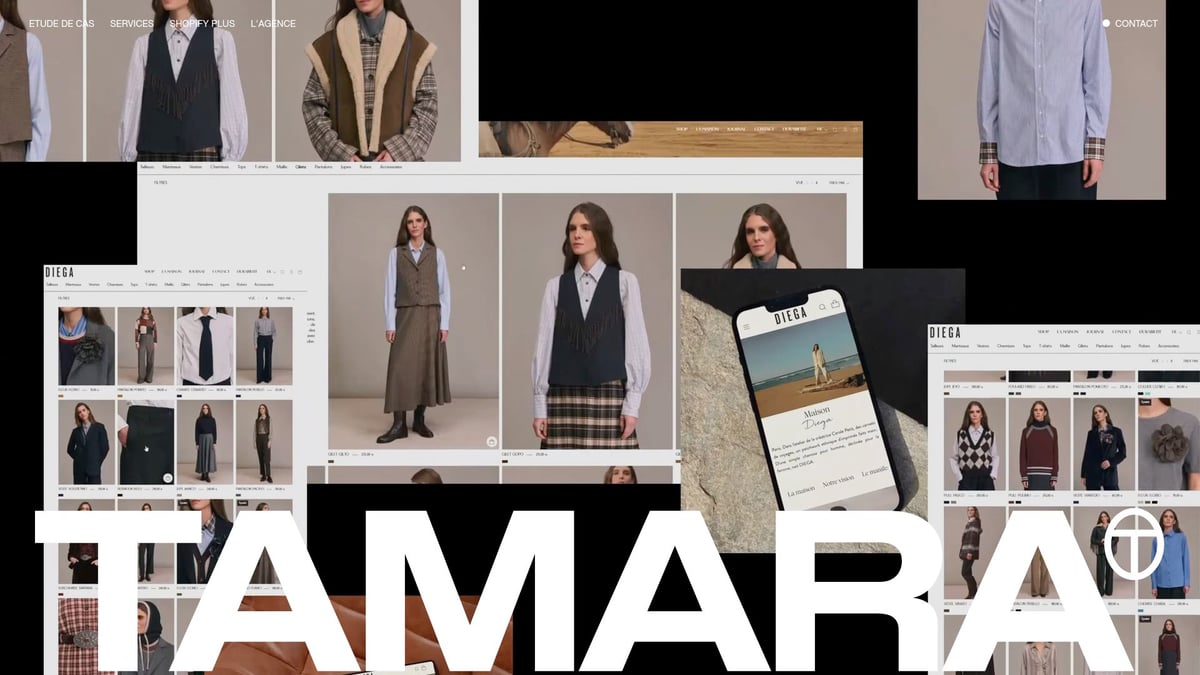
- Audit, artistic direction, UX/UI design, development, and optimization
- Measurable results: +30% to +98% sales after redesign
- Elegant design, technical performance, and bespoke marketing strategy
Their certified Shopify expertise is demonstrated with references such as Decathlon, Leonor Greyl, and Morphée. For e-commerce UI tailored for 2025, benefit from a personalized audit and expert support.
The Most Common UI Errors to Avoid in 2025
In the world of e-commerce UI, certain errors frequently reappear and hinder the performance of online stores. Avoiding them allows for offering an optimal experience, increasing conversions, and strengthening customer loyalty. Let's examine the major pitfalls to bypass for 2025.
Over-design and visual clutter
Over-design is a common mistake in e-commerce UI. Adding unnecessary graphic elements, excessive animations, or too many visual effects creates confusion and eye strain. The absence of white space impairs readability and complicates navigation.
Among the consequences, we observe a high bounce rate and quick abandonments. According to studies, 38% of visitors leave a visually too complex site. It is therefore essential to prioritize simplicity and clarity.
To correct this problem, focus on a clean design and highlight important content. A Shopify store redesign can help lighten the interface and modernize the e-commerce UI without losing the brand's identity.
Neglecting accessibility and mobile performance
Accessibility remains a pillar of high-performing e-commerce UI. Forgetting to offer an optimized mobile version or a responsive design excludes a large part of users. Insufficient contrasts and overly small buttons make navigation difficult, especially for people with specific needs.
Accessibility standards, such as keyboard navigation or alternative text, are often overlooked. This results in customer loss, poor SEO rankings, and compliance issues. In 2025, 54% of e-commerce traffic will be mobile, and 15% of users have accessibility needs.
Conduct regular audits and use appropriate tools to ensure inclusive and high-performing e-commerce UI across all devices.
Overly complex or non-linear purchase journey
Effective e-commerce UI relies on a simple and fluid purchase journey. Multiplying steps, requesting redundant information, or lacking clarity on the process's progress discourages the user. The absence of feedback or reassurance reinforces frustration.
The consequences are immediate: a cart abandonment rate that climbs up to 70% if the funnel is too long or confusing. It is crucial to offer clear calls to action, a simplified checkout, and visible progress indicators.
Streamline the journey to provide a pleasant, intuitive, and reassuring e-commerce UI experience, eliminating any unnecessary obstacles.
Lack of consistency and visual identity
Graphic consistency is essential in e-commerce UI. Using different colors or fonts on different pages, or ignoring the brand guidelines, harms brand recognition. The absence of a design system creates a break in the user experience.
A lack of visual consistency makes the brand difficult to remember and weakens trust. 80% of users associate color with brand image. To avoid this error, develop a detailed style guide, conduct regular audits, and harmonize the e-commerce UI across all channels.
Tools, Resources, and Inspiring Examples for Successful E-commerce UI
Choosing the right tools and resources is fundamental for successful e-commerce UI optimization. Each step, from design to performance monitoring, relies on adapted technological solutions. Let's discover the essentials for building a high-performing, consistent, and inspiring interface.
UI design and prototyping tools
To design effective e-commerce UI, tools like Figma, Sketch, or Adobe XD are essential. These platforms facilitate the creation of interactive mockups, team sharing, and the integration of design systems to ensure visual consistency.
Cloud solutions enable real-time collaboration, accelerate iterations, and centralize assets. The addition of plugins (accessibility, color palettes, icons) optimizes the workflow. For training, tutorials, webinars, and community exchanges are valuable resources. In 2025, 70% of e-commerce designers prefer Figma for its flexibility and collaborative power.
UI libraries and sectoral inspirations
UI libraries such as Material UI or Ant Design save time in developing harmonious e-commerce UI. They offer components adapted to specific e-commerce needs, such as product cards, filters, or carousels.
Inspiration remains essential: Dribbble, Behance, and Awwwards list the best achievements by sector (fashion, beauty, wellness). The adoption of proprietary design systems, customized beyond templates, now concerns 60% of stores. Regular monitoring of these platforms stimulates innovation and adaptation to trends.
UI audit and optimization tools
E-commerce UI optimization involves continuous analysis of performance. A/B testing tools like Google Optimize or AB Tasty test different interface versions to measure the impact on conversions. Heatmaps (Hotjar, Crazy Egg) visualize areas of attention and user journeys.
For accessibility, axe and Wave help verify compliance with standards. Performance audits with PageSpeed Insights or GTmetrix identify areas for improvement. A structured methodology (checklist, scoring, action plans) ensures effective monitoring. To learn more, discover tips to increase your sales through UI optimization.
Case studies and examples of high-performing e-commerce UI
Drawing inspiration from concrete cases is a powerful lever for improving e-commerce UI. Successful UI redesigns demonstrate significant gains in conversions, sometimes up to +98%. Award-winning stores (fashion, beauty, wellness) stand out with intuitive navigation, immersive product pages, and impactful visual storytelling.
To explore completed projects, visit the E-commerce Achievements Examples page and discover interfaces that combine design, user experience, and performance. Adapting the UI to sectoral specificities remains key to standing out and building lasting loyalty.
Sectoral Focus: E-commerce UI for Fashion, Beauty, and Wellness
E-commerce UI evolves significantly by sector, as each universe has its specific codes, expectations, and uses. In 2025, interface personalization and attention to the sensory experience will become major levers for fashion, beauty, and wellness. Let's analyze how these sectors are reinventing e-commerce UI to meet the demands of their customers.
UI specificities for fashion
In fashion, e-commerce UI primarily focuses on visual enhancement and immersion. Online stores integrate interactive lookbooks, fashion show videos, and advanced zooms to encourage purchases. Users expect fluid navigation, intuitive size selectors, and personalized product recommendations.
Some differentiating elements:
- High-definition images and interactive galleries
- Micro-interactions when exploring collections
- Strong visual storytelling around new arrivals
Key statistic: 65% of fashion customers state that the visual experience influences their purchasing decision. E-commerce UI in fashion must therefore combine aesthetics and effectiveness to attract and convert.
UI and sensory experience for beauty
The beauty sector values e-commerce UI that is gentle, accessible, and reassuring. Natural palettes, fluid animations, and enriched product pages (ingredients, routines, video tutorials) are essential. Makeup simulators or AR allow users to test products online, strengthening user engagement.
Essential points:
- Colors adapted to the brand's universe
- Visible trust labels and certifications
- Accessibility for all profiles (skin types, genders, specific needs)
With a +20% conversion rate on immersive product pages, beauty e-commerce UI must reassure, inspire, and facilitate choice. The integration of AI for interface personalization is developing, as shown by the rise of e-commerce trends 2025.
Wellness UI and user trust
Wellness e-commerce UI prioritizes simplicity and transparency to build trust. Soothing colors, clear navigation, and highlighted customer testimonials create a reassuring environment. Personalized tracking tools (dashboards, detailed FAQs) and chatbot integration support the user throughout their journey.
Key elements:
- Clean interface, without visual clutter
- Emphasis on health benefits and information transparency
- Enhanced accessibility for all profiles
70% of wellness customers prefer clear and transparent websites. A well-designed e-commerce UI fosters engagement and loyalty, while meeting the needs of each visitor.
Adapting the UI to the brand's DNA and customer expectations
For each sector, it is crucial to align e-commerce UI with the brand's identity and user expectations. High-performing brands adopt a co-creation approach, regularly test their interfaces, and adjust based on customer feedback. Personalized journeys, driven by data and AI, increase loyalty by over 30%.
Key takeaways:
- Evolving UI, adjusted based on user feedback
- Personalized journeys based on age, gender, purchasing habits
- Synergy between visual storytelling, e-commerce UI, and overall experience
To anticipate future expectations, it is recommended to draw inspiration from e-commerce trends 2025, which highlight continuous innovation and sectoral adaptation of e-commerce UI.