

8 Essential E-commerce Platforms in 2026
E-commerce is experiencing unprecedented growth, transforming the commercial landscape at high speed. In the face of this evolution, choosing the right e-commerce platform becomes essential for success and standing out in 2026.
This article guides you step-by-step to identify the ideal solution, evaluating key criteria such as innovation, scalability, simplicity, and adaptation to market trends. We analyze in detail 8 essential platforms, comparing them based on their features, pricing, and uses.
Ready to optimize your store and make the best choice? Discover our comprehensive comparison to build a high-performing and scalable e-commerce project.
E-commerce market overview in 2026
The e-commerce market is experiencing spectacular expansion in 2026, disrupting traditional retail practices. This transformation is based on strong global and national dynamics, driven by technological innovation, evolving customer expectations, and the rise of new digital uses.
Major trends and key figures in e-commerce
In 2026, global online sales continue to grow at a sustained pace, with annual growth of almost 15%. In France, the e-commerce sector surpasses the 150 billion euro mark, confirming its driving role in the digital economy. To illustrate these trends, the key figures for e-commerce in France 2025 show a continuous increase in sales and a diversification of distribution channels.
Mobile now holds a central place, accounting for more than 60% of transactions on an e-commerce platform. Social shopping and live shopping are becoming essential levers, particularly in the fashion, beauty, and wellness segments. Artificial intelligence, advanced personalization, and automation of purchasing journeys transform the customer experience, making each interaction more fluid and relevant.
Omnichannel is becoming the norm: consumers expect seamless continuity between online stores, social networks, and physical points of sale. Delivery speed, transparency on stock levels, and simplified returns management have become decisive criteria in choosing an e-commerce platform.
Certain sectors are experiencing exponential growth, notably eco-responsible products, health, fitness, and cosmetics. Major platforms like Shopify, WooCommerce, and PrestaShop share a large part of the market, while SaaS solutions and headless architectures are gaining ground among players looking for flexibility and innovation.
In summary, the combination of technology, adaptability, and a deep understanding of customer expectations is now essential for success on an e-commerce platform.
Criteria for choosing an e-commerce platform in 2026
Given this diversity of solutions, choosing the right e-commerce platform in 2026 requires a precise analysis of each company's needs and objectives. Ease of use and speed of launch remain decisive criteria for new entrants or brands looking for agility. The ability to customize, both in terms of design and functionality, is essential to stand out in a competitive environment.
Native integration of payments, logistics tools, and marketing modules optimizes the customer journey and stimulates growth. Security, GDPR compliance, and multilingual/multicurrency management have become indispensable, especially for players aiming for international expansion.
The total cost of ownership of an e-commerce platform must be carefully evaluated: subscriptions, commissions, additional modules, and development fees are all factors. The quality of customer support, the richness of the community, and the application ecosystem make a difference in supporting project evolution.
Finally, adaptation to specific needs, whether for very small businesses, SMEs, large companies, DNVBs, or B2B, guides the choice of the most relevant solution. Each e-commerce platform now offers options to meet various strategies, from local stores to international expansion.
8 Essential E-commerce Platforms in 2026
In 2026, choosing an e-commerce platform is crucial for success in an increasingly competitive digital market. Solutions evolve quickly, and entrepreneurs' expectations do too. Here is a detailed overview of the 8 essential platforms, compared according to their strengths, limitations, and adaptation to e-commerce trends.
Shopify
Shopify stands out as the benchmark e-commerce platform for launching and growing an online store quickly. Starting from €25/month, it offers a free trial and included hosting.

Main features:
- Quick store creation
- Premium themes and multichannel management (social networks, marketplaces)
- Integrated marketing tools and complete mobile application
- International management (currencies, taxes), Shopify POS
Strengths:
- Exceptional ease of use
- Scalability and rich ecosystem (Shopify App Store)
- Advanced automation and 24/7 support
Target audience:
- VSEs, SMEs, DNVBs, creators and growing brands
Advantages:
- Ultra-fast launch
- Reliability and active community
- Adapted B2B solutions
Disadvantages:
- Limited in-depth customization without a developer
- Commissions on certain sales, paid premium themes
Success stories:
- Decathlon, Leonor Greyl, Diega
Hesitating between Shopify and WooCommerce? Consult this Shopify vs WooCommerce comparison to choose the e-commerce platform best suited to your profile.
PrestaShop
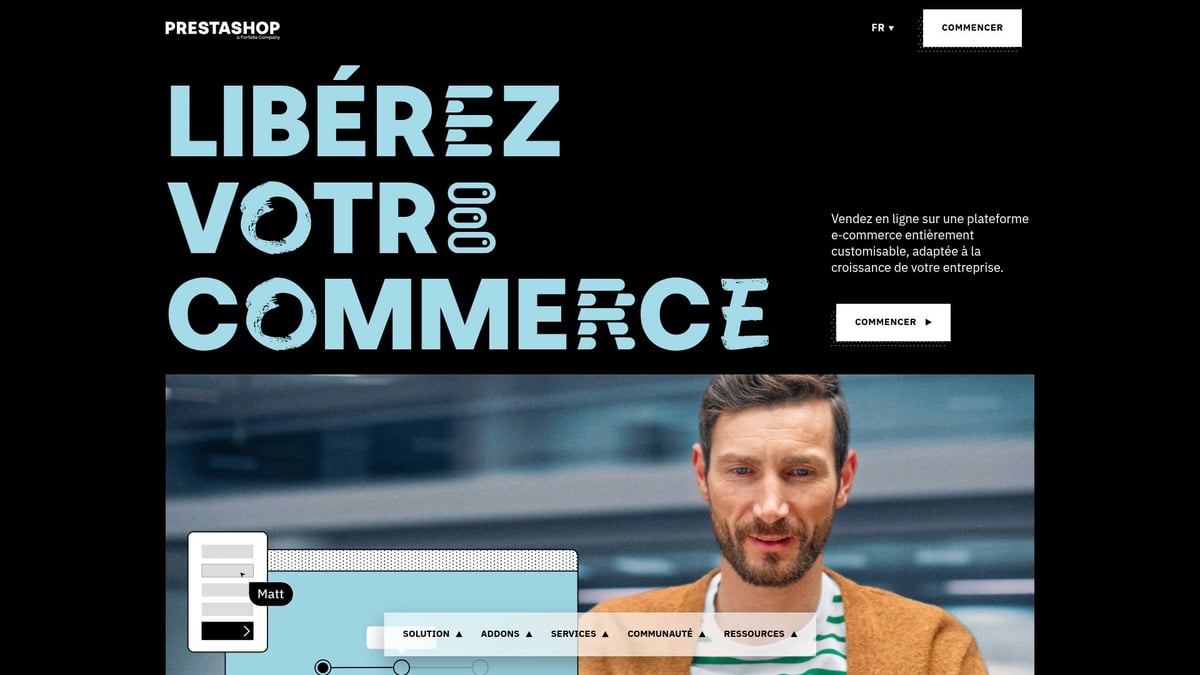
PrestaShop is an open-source e-commerce platform widely popular in France. It is free, but requires hosting and the purchase of additional modules for advanced features.
Main features:
- Advanced catalog management and total customization
- SEO modules and marketing tools
- Multi-store, stock management, multiple integrations
Strengths:
- Flexibility and independence
- Active French-speaking community
- Adapted to large catalogs, modules marketplace
Target audience:
- SMEs, large companies, experienced e-merchants
Advantages:
- No sales commissions
- Scalability and fine-tuned feature management
Disadvantages:
- Technical skills required for installation and maintenance
- Cost of modules, limited support in the free version
Examples:
- Over 250,000 stores worldwide, strong presence in France
BigCommerce
BigCommerce positions itself as a robust e-commerce platform, suitable for ambitious businesses and large catalogs. Plans start at $29/month, with hosting included.
Main features:
- Multichannel management (Google Shopping, Facebook, Amazon, eBay)
- Advanced SEO, B2B tools, ERP integrations
- Management of large catalogs
Strengths:
- Robustness for large businesses
- International sales tools, open APIs
Target audience:
- Ambitious SMEs, large brands, B2B/B2C companies
Advantages:
- No sales commissions
- Scalability, multi-store management, dedicated support
Disadvantages:
- Expensive themes, learning curve
- Customization sometimes complex
Examples:
- Grace & Lace, Skullcandy, international brands
WooCommerce
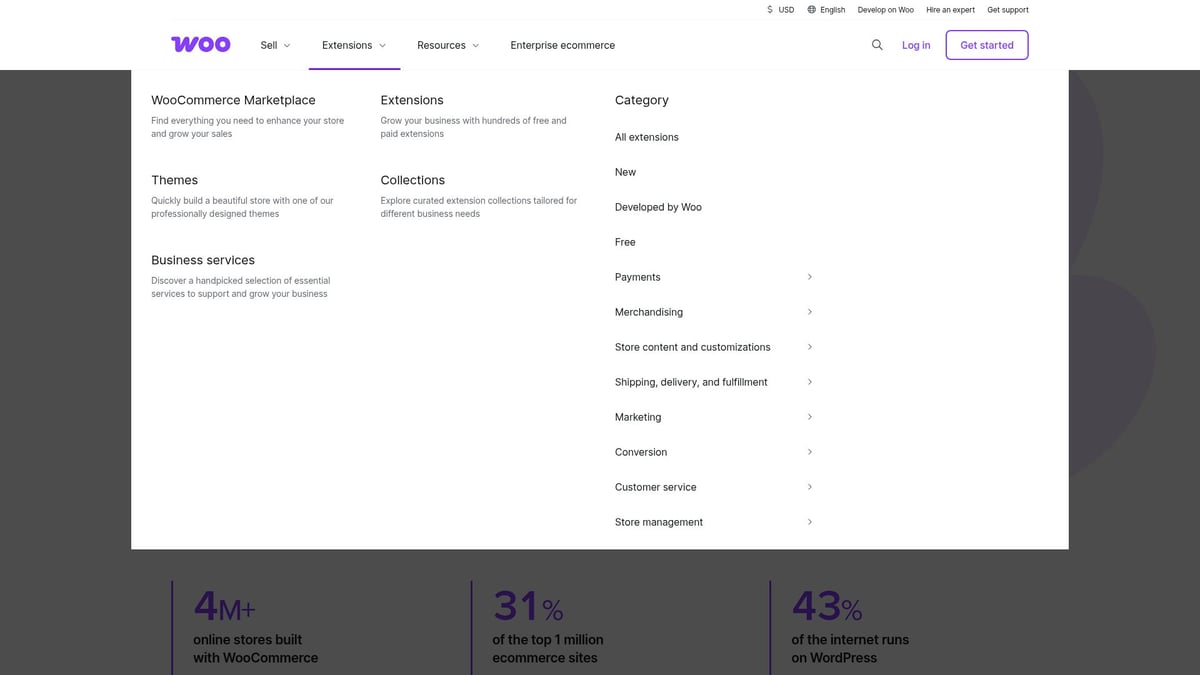
WooCommerce transforms WordPress into a powerful and flexible e-commerce platform. The extension is free, but hosting and certain modules are paid.
Main features:
- Native integration with WordPress
- Extensive customization, powerful SEO tools
- Stock management, wide choice of plugins
Strengths:
- Maximum flexibility, adaptation to existing sites
- Excellent natural referencing performance
Target audience:
- Bloggers, SMEs, creators already present on WordPress
Advantages:
- Total freedom, low base cost
- No sales commissions
Disadvantages:
- Technical maintenance is the merchant's responsibility
- Modules sometimes expensive, less suitable for very large catalogs
Examples:
- Over 6 million WooCommerce stores worldwide
Wix
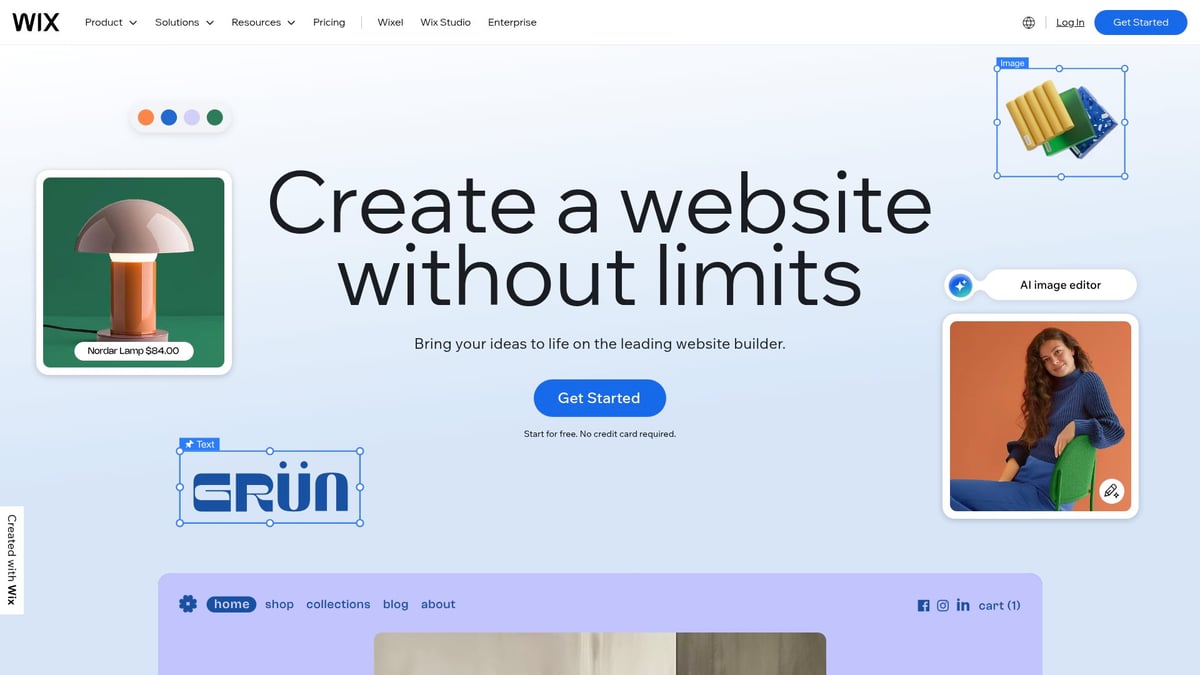
Wix offers an e-commerce platform ideal for freelancers and small businesses who want to get started without complexity. Prices start at €26.40/month (Business Basic).
Main features:
- Drag-and-drop editor, included hosting
- Customizable templates, order and payment management
- Multichannel selling (Facebook, Instagram via Ecwid), mobile app
Strengths:
- Extreme simplicity, quick launch
- Free basic plan for showcase site
Target audience:
- Freelancers, creators, small businesses, e-commerce beginners
Advantages:
- Intuitive handling, attractive design
- Support in French
Disadvantages:
- Limited e-commerce features in the basic offer
- Imperfect stock management, non-transferable sites
Examples:
- Artisans, local shops, coaches
Adobe Commerce (Magento)
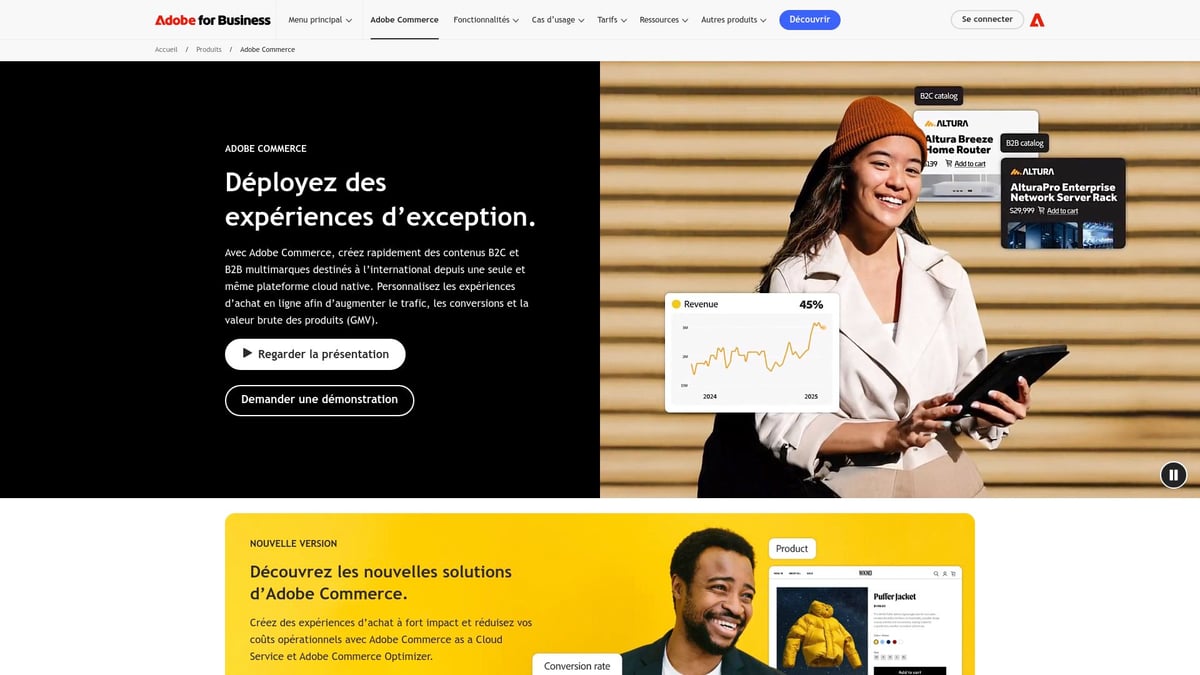
Adobe Commerce, formerly Magento, is a premium e-commerce platform designed for large enterprises and complex projects. Pricing is available by quote only.
Main features:
- Advanced personalization, management of complex catalogs
- Multi-store, ERP/CRM integration, powerful marketing tools
- Headless architecture possible
Strengths:
- Adaptability to complex needs, multi-country management
- Enhanced security, large ecosystem of modules
Target audience:
- Large enterprises, international groups, custom needs
Advantages:
- Total control, extreme scalability
- Advanced integrations
Disadvantages:
- High cost, requires a technical team
- No included hosting
Examples:
- Character.com, SMEs and large international groups
Shopware
Shopware is an innovative e-commerce platform, appreciated for its headless architecture and flexibility. It offers a free community version and professional offers by quote.
Main features:
- Headless architecture, flexible catalog management
- UX customization, open APIs, advanced marketing tools
- Multichannel selling
Strengths:
- Innovation (headless, PWA), adaptability
- Active European community
Target audience:
- SMEs, DNVBs, fast-growing companies, innovative projects
Advantages:
- Scalability, customization, optimized customer experience
Disadvantages:
- Fewer modules than Shopify or PrestaShop
- Documentation sometimes technical, support mainly in English/German
Examples:
- European SMEs, DNVBs, tech e-merchants
Sylius
Sylius is an open-source e-commerce platform, designed as a headless framework based on Symfony. It offers extreme flexibility for custom projects.
Main features:
- API-first architecture, back-end/front-end customization
- Complex catalog management, easy integration of third-party tools
Strengths:
- Total control, modern architecture
- Ideal for omnichannel and specific needs
Target audience:
- Developers, agencies, companies with advanced needs, B2B e-commerce
Advantages:
- Flexibility, scalability, adaptation to omnichannel
Disadvantages:
- Requires experienced developers
- No ready-to-use interface, development cost
Examples:
- Custom e-commerce projects, vertical marketplaces
Detailed comparison of e-commerce platforms: features, prices, and uses
Choosing an adapted e-commerce platform remains crucial for online success. To help you see more clearly, here is a synthetic comparison table of the main solutions on the market. This overview facilitates the identification of key points according to your needs.
Synthetic comparison table
| Platform | Model | Price (starting from) | Customization | Multichannel | Support | Ideal target |
|---|---|---|---|---|---|---|
| Shopify | SaaS | €25/month | Medium | Yes | 24/7 | VSEs/SMEs, DNVBs |
| PrestaShop | Open Source | Free+ | Very high | Yes | Community | SMEs, large accounts |
| BigCommerce | SaaS | €26/month | High | Yes | 24/7 | SMEs, B2B/B2C |
| WooCommerce | Open Source | Free+ | Very high | Limited | Community | SMEs, bloggers |
| Wix | SaaS | €26.40/month | Medium | Yes | French | Beginners, creators |
| Adobe Commerce | Headless | By quote | Extreme | Yes | Premium | Large enterprises |
| Shopware | Headless | Free+ | Very high | Yes | Europe | SMEs, DNVBs |
| Sylius | Headless | Free+ | Extreme | Yes | Developers | Custom projects |
Each e-commerce platform offers a different balance between cost, flexibility, and support.
Analysis of major differences between SaaS, open source, and headless
SaaS solutions like Shopify or Wix offer rapid deployment, simplified management, and responsive support. Ideal for those who want to start without technical expertise. Open-source platforms, such as PrestaShop and WooCommerce, appeal with their extensive customization and absence of commissions, but they require more technical skills.
Headless architectures, like Shopware, Sylius, or Adobe Commerce, meet the needs of ambitious, omnichannel, and custom projects. Each e-commerce platform therefore presents specific advantages depending on the level of mastery and innovation sought.
Highlighting typical use cases for each platform
For a quick launch, Shopify and Wix are popular. WooCommerce is suitable for businesses already having a WordPress site. PrestaShop is ideal for large catalogs or multi-stores. BigCommerce excels in B2B and internationalization thanks to its native tools.
Headless solutions like Sylius and Adobe Commerce are favored for marketplaces, complex, or scalable projects. Choosing an e-commerce platform means aligning your usage with your growth ambitions.
Tips for refining your choice based on project size, resources, and ambition
For a VSE or a creator, prioritize the simplicity of a SaaS. SMEs or fast-growing DNVBs will opt for PrestaShop, BigCommerce, or Shopware, which are capable of handling large volumes and offering advanced customization. Large companies or international projects will benefit from a headless architecture.
Carefully evaluate your internal resources, development budget, and the ability to maintain the e-commerce platform over time. Consider the application ecosystem and support, which are essential for your evolution.
Concrete examples of companies that have migrated from one platform to another and statistics
Many brands have migrated from PrestaShop to Shopify to gain agility and scalability. Discover how this transition can take place by consulting this detailed guide on Migrating from PrestaShop to Shopify. Customer satisfaction scores remain high: Shopify 4.4/5, Wix 4.2/5, BigCommerce 4.2/5, Adobe Commerce 4/5 according to G2/Capterra.
Choosing the right e-commerce platform also means drawing inspiration from feedback and statistics to maximize your chances of success.
Payment solutions and essential integrations to boost your e-commerce
In a world where every e-commerce platform aims for performance, payment and integration management becomes the foundation of a competitive store. In 2026, personalizing the customer journey and fluid transactions are essential to stand out.
Secure payments and omnichannel strategy
The first priority for any e-commerce platform is to ensure fast and secure payments. Integrating solutions like Stripe, PayPlug, PayPal, or Apple Pay reassures customers while diversifying payment methods. One-click payment, digital wallets, and split payments are now expected by consumers.
Omnichannel solutions are also gaining ground, connecting online sales, physical stores, social networks, and marketplaces. This unified approach optimizes the user experience, facilitates inventory management, and centralizes sales data.
Logistics integrations and marketing levers
To gain efficiency, your e-commerce platform must offer powerful logistics management tools. Inventory automation, synchronization with carriers, and simplified returns and exchanges management are major assets. Express or eco-friendly delivery modules also meet a growing demand.
On the marketing side, integrating newsletters, multichannel campaigns, promo codes, and abandoned cart recovery is essential. Platforms like Shopify or PrestaShop have application marketplaces that accelerate growth. To delve deeper into the strategies to adopt, consult the marketing strategies for Shopify, a key resource for maximizing visibility and engagement on your store.
Security, GDPR compliance, and sectoral choices
Transaction security remains an absolute requirement for every e-commerce platform. Compliance with GDPR, transparent management of customer data, and regular module updates guarantee trust and compliance.
Depending on your industry, select specialized modules: online booking for wellness, variant management for fashion, B2B tools for inter-company trade. The integration ecosystem must be adapted to your ambitions, while remaining scalable to keep pace with your store's growth.
FAQ on e-commerce platforms in 2026
Are you wondering about choosing an e-commerce platform adapted to your project for 2026? Here are the answers to the most frequently asked questions.
**Which e-commerce platform to choose to launch quickly in 2026?**
Shopify and Wix are ideal for an online store operational in a few hours, without technical skills.
**Which solution to favor for a very large catalog?**
PrestaShop, Adobe Commerce, or BigCommerce efficiently manage large catalogs with many references.
**Which platforms facilitate international and multilingual sales?**
Shopify, BigCommerce, and Adobe Commerce offer advanced management of currencies, languages, and taxes.
**Which e-commerce platform for a small budget?**
WooCommerce or PrestaShop (open source) allow you to start with a low investment, by managing your costs.
**What criteria for easy migration from one platform to another?**
Data export/import, the module ecosystem, and technical support are essential for a successful migration.
**How to anticipate the evolution of your technical and marketing needs?**
Prioritize an scalable solution, natively integrating customization, automation, and analysis tools.
**Where to find resources, training, or advice to optimize your e-commerce platform?**
Many specialized blogs, like this guide for optimizing SEO on Shopify, offer tips, tutorials, and support to succeed in 2026.