

Business Boutique Guide: Keys to Success in 2026
In 2026, succeeding in local retail will no longer be a simple objective, but a true strategic challenge. According to the latest studies, the number of independent boutiques in France increased by 18% between 2023 and 2025, illustrating a dynamic but highly competitive market.
This guide is for anyone who wants to transform their retail business into a sustainable growth model. You will discover market trends, essential digital strategies, the importance of customer experience, modern operational management, technological innovations, and advice from recognized experts.
Ready to make a difference? Take advantage of proven methods and concrete examples to excel in a rapidly changing environment. Adopt the recommendations of this guide to put your retail business on the path to success today.
Understanding the Retail Market in 2026
The retail market is about to undergo a profound transformation by 2026. Understanding its dynamics is essential for any business wishing to establish itself permanently. Between new trends, customer expectations, and unprecedented challenges, every aspect must be anticipated to build a competitive and sustainable retail business.
Major Trends in Local Retail
Since the pandemic, local retail has experienced a true renaissance. Independent boutiques are recording sustained growth, with an 18% increase between 2023 and 2025. This evolution is accompanied by the rise of "phygital," where the boundary between physical stores and digital experience blurs.
Innovative concepts, such as pop-up stores or experiential boutiques, are increasingly attracting consumers looking for novelty. To delve deeper into these developments, consult Trends in Local Retail in 2026, which details key figures and growth drivers. Thus, every retail business must integrate these changes to remain relevant in a shifting environment.
Consumer Profile 2026: Expectations and Behaviors
In 2026, consumers value authenticity, proximity, and environmental commitment. 67% of French people now prioritize responsible brands, which strongly influences the retail business model. Customers are no longer just looking for a product, but an experience and shared values.
Brands like Day by Day or Nature & Découvertes adapt their offerings to meet these new demands. They focus on transparency, local products, and concrete commitments to sustainable development. For a retail business, understanding these expectations helps strengthen loyalty and increase attractiveness.
Major Challenges to Anticipate
The retail business sector will face several major challenges. Rising logistics and energy costs weigh on profitability. Competition is intensifying with the rise of pure players and marketplaces, making differentiation essential.
Regulatory developments, particularly regarding accessibility and digitalization of payments, must also be anticipated. The stores that will succeed will be those capable of quickly adapting to these constraints, while maintaining an impeccable customer experience and optimal resource management.
Opportunities to Seize
Despite the obstacles, the market offers real opportunities for ambitious retail businesses. The valuing of "Made in France" and short supply chains attracts customers who value quality and traceability. Personalized services, such as appointment booking or tailor-made advice, create added value that is difficult to compete with.
The integration of technological solutions, such as intelligent inventory management or digital loyalty tools, allows for differentiation. Seizing these opportunities guarantees a retail business sustainable growth and an innovative image among consumers.
Competitive Analysis: How to Stand Out?
In a saturated market, competitive analysis becomes a strategic lever for any retail business. Studying sector leaders helps identify winning strategies, often based on storytelling and immersive in-store experiences.
Some brands double their turnover through specialization, original layouts, or the creation of unique universes. Focusing on a strong identity, clear values, and a memorable customer experience remains the best way to establish oneself sustainably in the retail business world.
Developing a Winning Digital Strategy
The success of a retail business in 2026 relies on a solid and evolving digital strategy. Consumer expectations are changing rapidly. Therefore, stores must adapt their online presence to remain competitive and respond to new uses. Mastering each digital lever becomes an essential asset for generating traffic, building loyalty, and boosting sales.
Digitalization of Stores: A Must in 2026
Digitalization is no longer an option for retail businesses. In 2026, 82% of points of sale with an e-commerce site show above-average sector growth. This transformation allows reaching a wider customer base, while strengthening the local relationship.
Being present on multiple channels is now essential. A well-designed website, social media profiles, and Google My Business maximize a retail business's local visibility. This also facilitates interaction with customers, who seek fluid experiences between physical and digital.
Creation and Optimization of a High-Performance E-commerce Site
A high-performance e-commerce site is the backbone of any modern retail business. The design must be responsive, adapt to all screens, and offer intuitive navigation. Local SEO optimization attracts local customers, which is essential for a neighborhood business.
Here is a comparative table of the main platforms suitable for boutiques:
| Platform | Ease of Use | Customization | Local SEO |
|---|---|---|---|
| Shopify | Excellent | High | Very Good |
| WooCommerce | Good | Very High | Good |
| Prestashop | Average | Average | Average |
Using suitable tools facilitates daily management and the evolution of the retail business. Choosing the right platform is a strategic investment.
The Role of Social Networks and Influencer Marketing
Social media has become indispensable for any retail business wishing to expand its audience. In 2026, 61% of in-store purchases are influenced by social media. It is therefore crucial to deploy engaging content strategies, such as videos, stories, or live shopping.
Collaborating with local micro-influencers helps attract a qualified audience and generate in-store traffic. An active presence on Instagram, Facebook, and TikTok strengthens brand image and creates a loyal community around the retail business.
Collecting and Analyzing Customer Data
Data is a powerful lever for personalizing the experience within a retail business. Using a CRM allows centralizing customer information and adapting offers according to their preferences. Tracking key indicators such as conversion rate, average basket, or purchase recurrence helps drive performance.
Marketing campaigns based on data analysis (data-driven) improve the relevance of actions and increase loyalty. Stores that invest in data collection and analysis gain a competitive edge.
Automation and Digital Tools for Efficiency
Automating repetitive tasks is a major asset for retail businesses. Automated inventory, order, and loyalty management solutions reduce errors and save valuable time. Marketing automation tools allow re-engaging customers with targeted and personalized promotions.
A concrete example: a retail business that automated its processes reduced its management costs by 25%, while offering more responsive service. Operational efficiency thus becomes a decisive competitive advantage.
Create or Migrate Your Store to Shopify with an Expert
Shopify is emerging as the benchmark solution for retail businesses in beauty, fashion, or well-being. This platform offers a high-performing, scalable, and conversion-optimized store. Expert support ensures the success of the project, from creation to optimization.
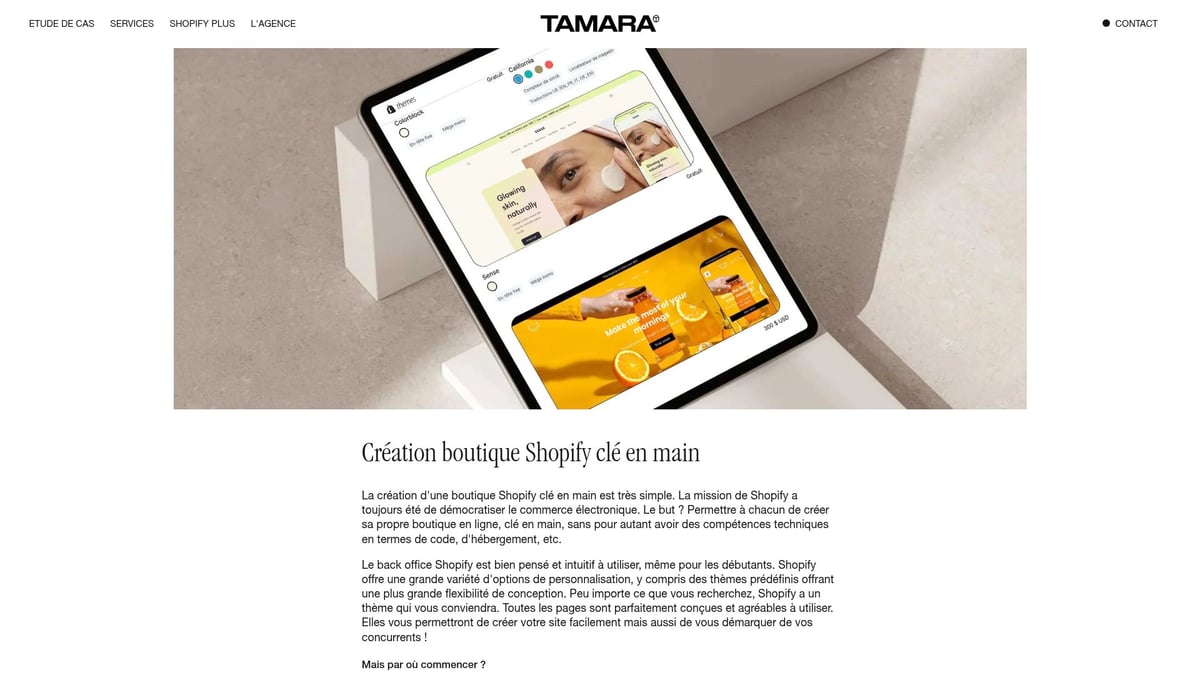
The results are tangible: after migration or redesign on Shopify, many retail businesses see a sales increase of +30% to +98%. To go further, discover how to create a Shopify store tailored to your objectives and market.
Delivering an Exceptional Customer Experience
Customer experience is now at the heart of a retail business's success. In 2026, the challenge is no longer limited to selling, but to creating a strong, memorable, and lasting bond with each visitor. This pillar differentiates successful businesses from those struggling to retain customers. Let's explore how to excel in this area through the essential levers for a high-performing local business.
Welcome and Human Relationship in Store
The welcome remains the first, often decisive, contact in a retail business. Staff trained in active listening build customer trust and loyalty. It is crucial to value human skills, as personalized advice often makes the difference.
Some best practices to adopt:
- Continuous training in customer relations
- Implementation of a clear welcome charter
- Regular monitoring of satisfaction via direct feedback
Businesses that invest in service excellence see their customers return more frequently. People are at the center of any ambitious retail business.
Omnichannel and Seamless Customer Journey
The customer journey in a retail business must be seamless, whether the customer is online or in-store. Omnichannel is becoming a standard in 2026. Click & Collect, online appointment booking, contactless payment—every step matters.
Essential tools:
- Real-time inventory synchronization
- Consistent offers across all channels
- Responsive customer service on-site and remotely
According to studies, 70% of customers expect a seamless experience across different touchpoints. A retail business that masters these aspects retains customers more effectively.
The Importance of Design and Ambiance in Store
The interior design and ambiance of a retail business influence the time spent in-store and the average basket value. Thoughtful layout, adapted lighting, and clear signage contribute to the attractiveness of the place.
Sensory design, which engages all senses, reinforces the retail business's identity. Concept stores relying on an immersive experience often see their revenue grow rapidly.
Case study: some retail businesses have doubled their average basket by focusing on a unique and differentiating ambiance, proving that the physical environment remains a powerful lever.
Personalization of Offerings and Services
Personalization is becoming a standard for any retail business wanting to stand out. Tailored loyalty programs, personalized offers, and on-demand products appeal to a customer base seeking exclusivity.
Examples of innovative initiatives:
- Creative workshops or in-store demonstrations
- Exclusive events for loyal members
- Using data to anticipate needs
By anticipating expectations, a retail business increases conversion rates and customer satisfaction. Customers appreciate being recognized and valued individually.
Complaint Management and Loyalty Building
Complaint management is a key moment to turn a negative experience into a loyalty-building opportunity. A high-performing retail business implements clear processes for returns and responsive after-sales service.
Strategies to prioritize:
- Personalized newsletters
- VIP clubs and exclusive benefits
- Systematic post-purchase follow-up
A loyal customer spends 33% more than a new one. To learn more, discover how to revitalize your business in 2026 through proven strategies focused on loyalty in retail business.
Measuring and Improving Customer Satisfaction
Measuring satisfaction in a retail business requires adapted tools. The Net Promoter Score (NPS), post-purchase surveys, or Google reviews provide valuable feedback.
Analyzing negative reviews is an opportunity to improve. Several retail businesses have successfully transformed criticisms into areas for improvement, generating sustainable growth. Active listening and rapid adaptation are major assets for staying competitive.
Accessibility and Inclusivity as Key Factors
Accessibility is essential for a retail business keen to welcome all audiences. Adapting the space for people with reduced mobility, families, or seniors expands the customer base.
Inclusive communication and valuing diversity strengthen the positive image of the retail business. Every visitor should feel welcome and understood, regardless of their needs or profile.
Mastering Operational and Financial Management
Mastering operational and financial management is vital to ensure the growth and sustainability of any retail business in 2026. The stakes are evolving rapidly, requiring unwavering rigor and constant adaptability to the changing retail environment from merchants.
Location Selection and Store Layout
The choice of location is the cornerstone of success for a retail business. In 2026, key criteria include pedestrian traffic, visibility from main roads, and accessibility for all audiences. Dynamic neighborhoods with good public transport links attract a diverse clientele and facilitate in-store visits.
The store layout must be optimized to maximize sales area while ensuring functional back-office operations. Integrating experience zones, attractive window displays, and modular spaces increases time spent in the store. Several brands have doubled their foot traffic following a strategic relocation, illustrating the concrete impact of a well-considered location choice.
Inventory and Supplier Management
Efficient inventory management is one of the pillars of profitability for a retail business. Using automated tools and rolling inventories reduces errors and anticipates stockouts, thereby improving customer satisfaction. Connected management platforms allow real-time monitoring of stock levels and avoid costly overstocking.
Selecting local suppliers, favoring short supply chains, offers better control over lead times and increased flexibility during peak activity. Reducing stockouts also limits lost sales and strengthens customer loyalty. Businesses that invest in these tools see a significant improvement in their operational performance.
Recruitment, Training, and Team Management
Recruitment and team training are central challenges for any ambitious retail business. In 2026, versatile profiles comfortable with digital tools and possessing excellent interpersonal skills are particularly sought after. Continuous training becomes an essential lever for maintaining staff motivation and engagement.
Innovative HR policies, such as mentoring or access to e-learning modules, foster skill development. Participatory management, based on listening and recognition, helps limit turnover and create a strong company culture. Brands that invest in their teams see a significant increase in productivity and customer service quality.
Financial Management and Cost Optimization
Rigorous financial management is essential to ensure the profitability of a retail business. Developing a precise business plan, regularly monitoring key indicators (revenue, margin, working capital requirement), and optimizing expenses help stay on track for growth. Implementing monthly reporting provides a clear vision for adjusting strategy if necessary.
Cost optimization also involves improving internal processes and automating certain tasks. To go further, resources such as Optimize Your Shopify Store offer concrete solutions to maximize the financial and operational performance of your retail business, while maintaining control over expenses.
Security and Risk Management
Securing one's business is a priority in an increasingly digitalized commercial environment. For a business boutique, this means choosing appropriate insurance, strengthening cybersecurity, and effectively preventing losses and theft. Compliance with regulations, particularly GDPR and accessibility standards, protects the company against sanctions and legal risks.
A well-prepared business continuity plan enables rapid reaction to unforeseen events, whether cyberattacks, disasters, or health crises. Businesses that have anticipated these risks demonstrate greater resilience and increased customer trust.
Funding and support for creation/development
Financing remains a key step for any business boutique, whether for creation or development. In 2026, a wide range of public aid, regional subsidies, and banking mechanisms will be available to support local retail entrepreneurs.
To maximize chances of obtaining funding, it is advisable to prepare a solid application, including a detailed business plan and a clear presentation of the project. Support networks and chambers of commerce can guide you towards the most suitable schemes for your business boutique and your growth ambitions.
Innovating to Sustain Your Business Boutique
In a context where business boutiques must constantly reinvent themselves, innovation becomes the main driver of sustainability. Anticipating new trends and investing in differentiating solutions not only fosters customer loyalty but also ensures sustainable growth. Let's explore the major axes that will make a difference for any ambitious business boutique in 2026.
Integration of new technologies in stores
The rapid adoption of innovative technologies is now essential for any business boutique wishing to remain competitive. Interactive kiosks, augmented reality, or mobile payment transform the customer experience and stimulate foot traffic.
For example, many brands have seen their foot traffic increase by 20% after installing immersive solutions. Investing in the redesign of a business boutique with digital tools, as illustrated in the article Shopify Store Redesign, provides a solid foundation for continuous innovation and conversion optimization.
Sustainable development and social responsibility
In 2026, business boutiques cannot ignore environmental issues. Eco-design, waste reduction, and solidarity partnerships are no longer options but strong consumer expectations.
58% of customers now prefer responsible points of sale. Implementing a recycling system, choosing local suppliers, and communicating commitments allows the business boutique to strengthen its legitimacy and attract an engaged clientele.
Diversification of offerings and new services
Diversifying the offering is a powerful lever for energizing a business boutique. Workshops, subscriptions, product rentals, or event sales add value and build customer loyalty.
Some business boutiques have tripled their turnover by launching complementary offers or creating regular events. Thinking outside the box makes it possible to meet new needs and increase the average basket size.
Collaboration with other merchants and local actors
There is strength in unity, especially for a business boutique rooted in a local fabric. Sharing services, organizing cross-events, or joining a network of merchants promotes visibility and attractiveness.
Successful collaborations have allowed several business boutiques to increase their notoriety and generate a regular flow of new customers. This local synergy becomes a strategic asset in the face of competition from large chains.
Adapting to regulatory and societal changes
The business boutique must anticipate legislative changes to remain compliant and competitive. Accessibility, taxation, environment – every regulatory aspect influences strategy and offerings.
Adapting the business boutique to new lifestyles, such as mobility or teleworking, makes it possible to seize opportunities and effectively meet emerging customer expectations.
Strategic watch and continuous training
Staying at the forefront of innovation requires active monitoring of trends, consumer expectations, and technologies. Participating in trade shows, attending webinars, or joining professional networks allows the business boutique to be agile and reactive.
Businesses that prioritize continuous training and strategic agility manage to quickly bounce back from market challenges. This is the key to transforming every change into a growth opportunity.