


Shopify e-commerce redesign: boost your sales in 2026
Your Shopify store is stagnating, conversions are plateauing, and your mobile visitors are abandoning their carts before even reaching checkout. A well-orchestrated e-commerce redesign transforms these symptoms into concrete opportunities: measurable conversion gains, a fluid user experience, and scalable technical architecture. For beauty, fashion, and wellness brands, this transformation goes beyond a simple visual facelift. It restructures the customer journey, SEO, integrations, and automations to generate sustainable growth and increased loyalty on Shopify.
Table of contents
- Key takeaways
- What is an e-commerce redesign and why consider it
- Comprehensive methodology for a successful Shopify e-commerce redesign
- Specifics and best practices for beauty, fashion, and wellness brands on Shopify
- Risks, common mistakes, and best strategies for a successful redesign
- Need help with your Shopify redesign in beauty, fashion, or wellness?
- Frequently Asked Questions
Key points
| Point | Details |
|---|---|
| Redesign definition | E-commerce redesign aims for a complete site overhaul including UX design, SEO, and integrations to boost performance and sales. |
| KPI objectives | Set realistic quantitative targets like +25% revenue and +20% conversion to guide the project. |
| Mobile first | Over 70% of visits come from mobile, and every second of loading time costs conversions. |
| SEO from the start | Migrate URLs with 301 redirects and plan meta tags, structured data, and internal linking to preserve and amplify SEO. |
| Measurable benefits | Reduced mobile bounce rate, increased time on site, and growth in recurring sales. |
What is an e-commerce redesign and why consider it
An e-commerce redesign is the process of completely revising and improving an online sales site, including design, UX/UI, technical functionalities, SEO, customer journey, and integrations, aiming to boost performance and sales. Unlike a simple cosmetic update, it reinvents the overall architecture of your store to meet current consumer expectations and Shopify's technical requirements.
For beauty, fashion, and wellness brands, this transformation addresses specific business challenges. Your customers are looking for immersive visual experiences, personalized recommendations, and impeccable mobile navigation. A targeted redesign optimizes these dimensions while reinforcing conversion, average cart value, and return rates. The objectives go beyond aesthetics: improve loading speed, streamline the purchase funnel, integrate loyalty tools, and automate marketing workflows.
The benefits measured on Shopify in your sectors illustrate the direct impact. Brands that invest in a well-designed Shopify beauty store creation see immediate gains: reduced mobile bounce rate, increased time spent on site, and growth in recurring sales. A professional Shopify store redesign repositions your brand against the competition while maximizing return on investment.
Pro tip: Before launching your redesign, audit your Analytics data to identify high-abandonment pages and blocking customer journeys. These insights will guide your UX and technical priorities from the outset.
"A successful redesign is never just a theme change. It's a strategic revision of every friction point that separates your visitors from the final purchase."
The importance of mobile-first cannot be underestimated. More than 70% of e-commerce visits now come from mobile devices, and every extra second of loading costs conversions. An optimized Shopify architecture, built on OS 2.0 with a minimum of third-party apps, guarantees speed and stability. Brands that neglect this dimension lose customers and revenue to more agile competitors.
Finally, e-commerce redesign integrates SEO from the design stage. Migrating URLs without a 301 redirect strategy destroys months of natural referencing. Planning navigation structure, meta tags, structured data, and internal linking from the initial audit preserves your organic visibility while amplifying it. This holistic approach transforms your store into a sustainable growth engine.
Comprehensive methodology for a successful Shopify e-commerce redesign
The standard redesign methodology follows a structured process in seven key steps. Each phase addresses specific objectives and relies on measurable indicators to guarantee success and return on investment.
-
Comprehensive audit: Analyze current UX, technical performance, SEO, user behavior, and business results. Identify friction points, slow pages, 404 errors, and improvement opportunities. This factual assessment guides all subsequent decisions.
-
KPI objective definition: Set realistic quantitative targets such as +25% revenue, +20% conversion. These benchmarks guide design, development, and final validation. Without clear KPIs, it's impossible to measure the success of the redesign.
-
Theme and architecture choice: Prioritize Shopify OS 2.0 themes for flexibility, performance, and scalability. Limit third-party applications to the strict minimum to preserve loading speed and avoid technical conflicts.
-
Mobile-first UX/UI design: Design a fluid customer journey, clear visual hierarchy, and intuitive interactions. Test prototypes with real users before development to validate hypotheses.
-
Development and integrations: Connect ERP, CRM, marketing tools, and logistics. Automate workflows via Shopify Flow to reduce manual tasks and improve responsiveness.
-
Staging tests: Duplicate the store in a test environment to validate functionalities, purchase funnel, responsive design, and integrations without impacting the live site. This step prevents critical bugs at launch.
-
SEO migration and launch: Implement 301 redirects for each modified URL, check meta tags, structured data, and sitemap. Launch after complete validation and post-redesign monitoring for immediate adjustments.
| Step | Objective | Indicative duration |
|---|---|---|
| Audit | Identify strengths, weaknesses, opportunities | 1-2 weeks |
| KPI objectives | Set measurable targets (+25% revenue, +20% conversion) | 3-5 days |
| UX/UI Design | Create mobile-first mockups validated by users | 3-4 weeks |
| Development | Code theme, integrate apps, automate workflows | 4-6 weeks |
| Staging tests | Validate functionalities, funnel, responsive | 1-2 weeks |
| SEO Migration | Implement 301 redirects, check tags | 1 week |
| Launch | Go-live, monitoring, adjustments | 1 week |
Pro tip: Organize collaborative workshops bringing together SEO, UX, and development teams from the audit stage. This coordination avoids silos, costly errors, and delays. Each profession brings complementary expertise for informed decisions.
Brands that follow this rigorous methodology see rapid and sustainable gains. A structured Shopify beauty store creation built around these steps maximizes performance from launch. The initial Shopify UX/UI audit often reveals unexpected opportunities: funnel simplification, catalog reorganization, product sheet optimization.
Finally, the Shopify redesign guide recommends using staging environments via theme duplication or dev store. This practice secures development, facilitates collaborative testing, and prevents service interruptions. Launching a redesign directly on a live site without prior validation exposes it to critical bugs, sales losses, and customer frustration.
Specifics and best practices for beauty, fashion, and wellness brands on Shopify
The beauty, fashion, and wellness sectors require specific approaches to capture attention, inspire confidence, and convert visitors into loyal customers. Integrate AI personalization such as skin diagnostics, tailored product recommendations, and interactive quizzes. These tools engage users while collecting valuable data for targeted marketing.
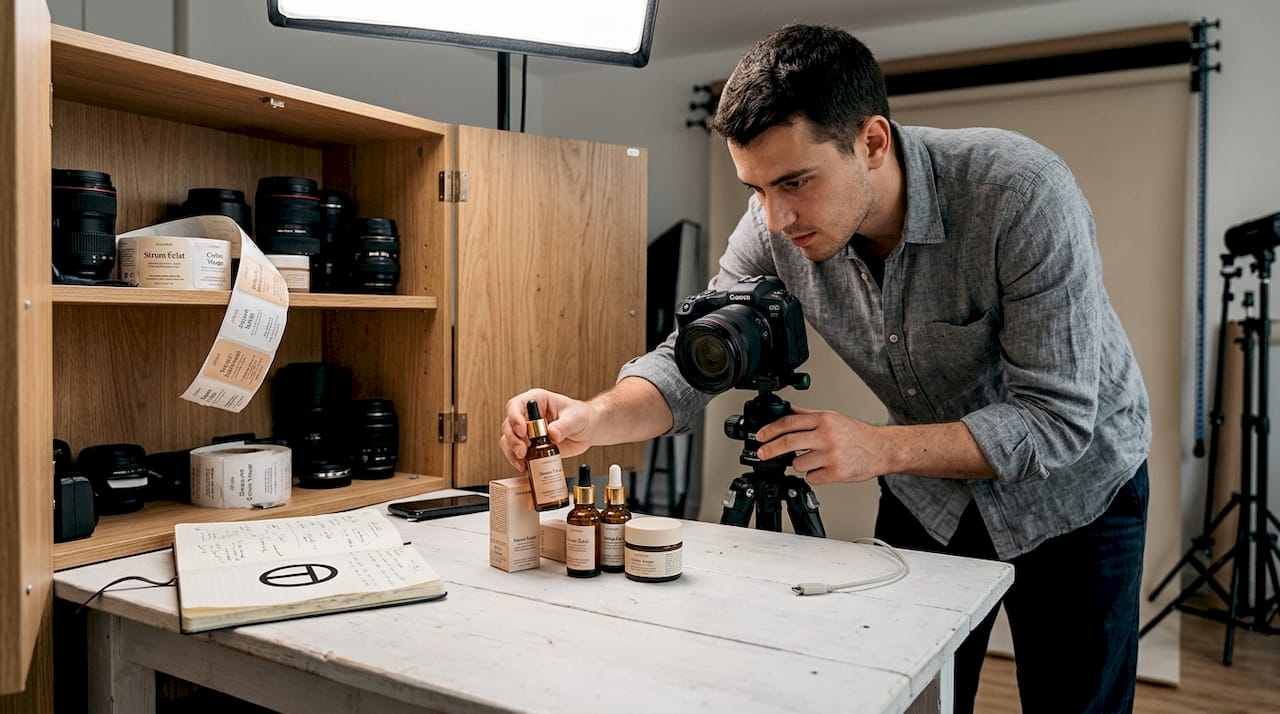
Immersive visuals play a central role. Prioritize high-resolution photos, short videos showing textures and results, inspiring lookbooks, and user-generated content. An integrated Instagram gallery or customer review module with photos reinforces reassurance and desirability. Beauty and fashion consumers buy as much emotion as product.
To use OS 2.0 themes, limit third-party apps to preserve speed. Each added app slows down loading and complicates maintenance. Shopify Flow automates marketing workflows, inventory management, and customer notifications without burdening infrastructure. This approach ensures scalability without technical debt.
| Criterion | Fast OS 2.0 theme | Overloaded theme |
|---|---|---|
| Mobile speed | < 2s loading | > 4s loading |
| Installed apps | 5-8 essential | 15-25 superfluous |
| Scalability | Excellent | Limited |
| Maintenance | Simple | Complex |
| Conversion | Optimal | Degraded |

Empirical benchmarks in beauty and wellness demonstrate measurable impact: La Rosée recorded +88% sales and +53% conversion after redesign. Omy Laboratoires saw +60% sessions and +35% loyal customers. Profumerie Griffe showed +102% sales in Q1. These results validate investment in professional redesign tailored to sector codes.
Pro tip: Activate maximum reassurance via satisfaction or money-back guarantees, secure payment badges, verified reviews, and a responsive chatbot. Beauty and wellness consumers hesitate before a first purchase. Overcome objections from the product page to streamline conversion.
Concrete examples illustrate good practices. The Morphee.co redesign optimizes the sleep journey with a personalized quiz and educational content. The YesForLove case focuses on emotional storytelling and lifestyle visuals to capture a conscious fashion audience. These sectoral approaches transform stores into inspiring destinations.
Finally, leverage behavioral data to refine offers and communications. Segment audiences based on purchase history, product preferences, and engagement. Automate post-purchase emails, abandoned cart reminders, and loyalty programs via Shopify Flow. This continuous personalization maximizes lifetime value and repurchase rates.
Risks, common mistakes, and best strategies for a successful redesign
E-commerce redesign pitfalls are costly in terms of visibility, sales, and reputation. SEO drops without 301 redirects are among the most common errors. Every modified URL without redirection loses accumulated SEO juice and generates frustrating 404 errors for users and search engines. A rigorous technical audit before launch prevents this disaster.
Data tracking loss occurs when Analytics integrations, advertising pixels, and CRM tools are poorly reconfigured. You launch a redesign without visibility on real performance, making post-launch optimizations blind. Check every tag, event, and conversion before going live.
A broken mobile funnel remains a critical error. Testing only the desktop version ignores 70% of your traffic. Validate each step of the purchase journey on real smartphones and tablets, not just emulators. An invisible payment button or unreadable form destroys conversions instantly.
- Team silos: SEO, UX, and development work in isolation without coordination. Result: beautiful but slow design, SEO sacrificed for aesthetics, untested technical features.
- Underestimated budget: Hidden costs emerge during development: complex integrations, data migrations, extended testing, bug fixes. Budgeting a 20-30% margin avoids roadblocks.
- Launch without staging: Deploying a redesign directly on a live site without prior validation exposes it to critical bugs, service interruptions, and immediate sales losses.
"Redesigns rarely fail due to a lack of technical skills. They fail due to a lack of coordination, insufficient testing, and rushing the launch."
Pro tip: Create an exhaustive pre-launch validation checklist: 301 redirects, Analytics tracking, mobile funnel, loading speed, third-party integrations, transactional emails, sitemap, structured data. Check every point before going live.
The best strategies rely on transparent communication and rigorous testing. Involve stakeholders from the audit stage: management, marketing, customer service, IT. Their field feedback enriches the specifications and prevents costly oversights. Organize weekly reviews to track progress, adjust priorities, and resolve roadblocks quickly.
Favor an iterative approach over a big bang. Launch the redesign in phases: homepage and navigation first, then product pages, finally the purchase funnel. This method limits risks, facilitates adjustments, and keeps the site operational during the transition. Users gradually adapt to changes without abrupt disruption.
Finally, plan intensive post-launch monitoring. Daily track critical KPIs: organic traffic, conversion rate, average cart value, mobile bounce rate. Identify anomalies quickly and correct them immediately. The first few weeks post-redesign reveal necessary adjustments to maximize performance. An expert Shopify consultant supports this crucial phase to ensure success. Continuous Shopify store optimization after launch guarantees continuous improvement.
Need help with your Shopify redesign in beauty, fashion, or wellness?
Are you considering an e-commerce redesign but dread the technical complexity, SEO risks, and team coordination? Tamara Agency has been assisting beauty, fashion, and wellness brands since 2018 to transform Shopify stores into sustainable growth engines.

Our sector-specific expertise covers Shopify beauty store creation, complete redesigns, UX/UI optimization, and strategic consulting. We master the aesthetic and behavioral codes specific to your universes to create engaging experiences that maximize conversion and loyalty. From initial audit to monthly post-launch monitoring, we meticulously orchestrate each step: mobile-first design, OS 2.0 architecture, ERP/CRM integrations, secure SEO migration, and Flow automations.
Our Shopify consultants analyze your business challenges, define ambitious KPIs, and lead projects to measurable success. We also offer Shopify training to empower your teams for daily management and continuous optimization. Contact us to transform your store into an inspiring and high-performing destination.
Frequently Asked Questions
What are the key steps in an e-commerce redesign?
Essential steps include a comprehensive UX, SEO, and performance audit, defining measurable KPI objectives, mobile-first design, development on an OS 2.0 theme, rigorous staging tests, SEO migration with 301 redirects, and launch followed by intensive monitoring. Each phase meets precise objectives and relies on factual validation before moving to the next.
How to avoid losing SEO ranking during a Shopify redesign?
Never launch without a rigorous technical SEO audit identifying all URLs to migrate. Implement 301 redirects for each modified URL, check meta tags, structured data, and sitemap before going live. Post-launch monitoring quickly detects anomalies for immediate correction.
What is the importance of mobile-first in an e-commerce redesign?
More than 70% of e-commerce visits come from mobile devices, making the mobile experience crucial for conversion. A mobile-first approach ensures fast loading, intuitive navigation, and a fluid purchase funnel on smartphones. Neglecting this dimension costs customers and revenue in the face of more agile competitors.
What are some concrete examples of inspiring sector-specific successes?
La Rosée recorded +88% sales and +53% conversion after a Shopify redesign. Omy Laboratoires saw +60% sessions and +35% loyal customers thanks to UX optimization and personalization. Profumerie Griffe showed +102% sales in Q1 following migration and improved customer journey. These benchmarks validate investment in a professional redesign adapted to beauty, fashion, and well-being codes.