

2026 Beauty E-commerce Brand Creation Guide
TL;DR:
- Launching an online beauty brand requires careful preparation, notably by registering your brand with the INPI and complying with cosmetic standards. Success also depends on marketing strategy, rigorous inventory management, and platform optimization, with Shopify being the preferred choice for its compatibility and tools. Building lasting credibility takes time, absolute transparency, and constant attention to legal and financial aspects.
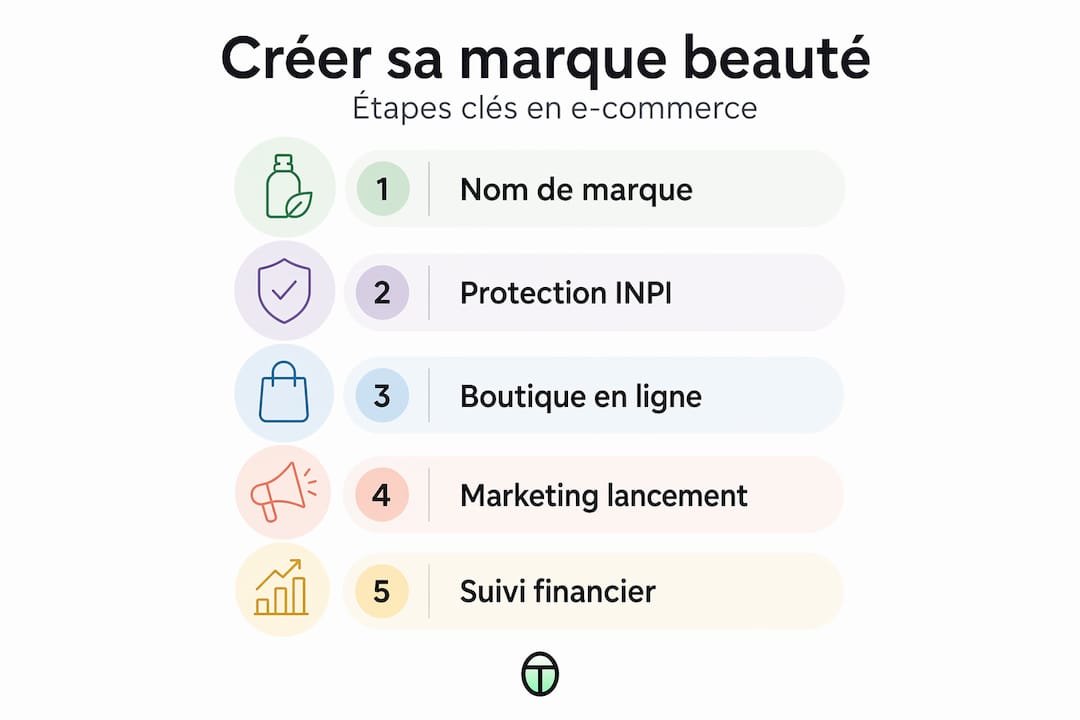
Launching an online beauty brand seems accessible. A product idea, a logo, a website… and the orders start coming in. In reality, many entrepreneurs discover too late that without a structured e-commerce brand creation process guide, mistakes accumulate: unprotected brand name, ignored cosmetic compliance, non-mobile-optimized website, poorly calibrated marketing budget. This guide gives you the concrete steps to build a solid beauty e-commerce brand, from initial planning to the first month of sales, without the costly approximations.
Table of Contents
- Key Points
- Prerequisites and Pre-Launch Planning
- Store Design and Development
- Marketing Strategies for Launch
- Long-Term Financial and Legal Management
- My Experience with These Projects
- Tamaragency Supports You at Every Step
- FAQ
Key Points
| Point | Details |
|---|---|
| Protect your name from the start | Register your brand with the INPI before any launch to avoid a costly legal block. |
| Choose the right platform | Shopify remains the beauty standard for its fluidity and available app ecosystem. |
| Comply with cosmetic standards | Every product sold must be manufactured in an ISO 22716 certified laboratory, with a complete DIP. |
| Anticipate European VAT | The OSS system becomes mandatory at €10,000 in sales outside France; plan for it from the start. |
| Manage with precise indicators | Track mobile conversion, cart abandonment rate, and inventory turnover from the first month. |
Prerequisites and Pre-Launch Planning
Before touching a website creation tool, three questions deserve a clear answer. Who exactly are you selling to? What pain are you solving? And why your product rather than another? In the beauty and wellness sector, the niche counts double: a brand dedicated to skincare for combination skin prone to acne will speak louder than a generic “natural skincare” brand.
The Brand Name, a Lasting Asset
The name is the most lasting asset of a company, according to onomaturge Olivier Auroy. An effective name tells a story, creates an immediate association, and withstands the test of time. Avoid overly descriptive names (“NaturalCream”) that hinder brand registration, and forget names that are impossible to pronounce aloud. Test it with ten people from your target audience before making it official.
Legal Obligations Not to Be Overlooked
Legally, the list is precise. Legal notices, Terms and Conditions, GDPR privacy policy, and the 14-day right of withdrawal are mandatory from the first day of activity. For cosmetic products, the regulations go further: each product must have a Product Information File (DIP) and be notified via the European CPNP portal before being placed on the market.
Registering a brand with the INPI is often wrongly postponed. Registering a brand costs €190 for one class, with €40 per additional class. Renewal every ten years costs €290, but late renewal incurs a 50% surcharge. Acting early costs less than repairing later.
Pro tip: Before registering with the INPI, conduct a prior art search on the EUIPO and INPI brand databases. A name already registered in your business class can block your entire launch, even if the holder is inactive.
| Element | Estimated Cost | Timeline |
|---|---|---|
| INPI brand registration (1 class) | €190 | 5 to 6 months |
| Additional class | +€40 | Included |
| Renewal (10 years) | €290 | Plan ahead |
| Simple e-commerce store budget | €2,000 to €5,000 | Variable |
Store Design and Development
A beauty store is not built like a general website. The technical decisions made at this stage will determine your ability to convert in 12 months.
Which Platform to Choose?
Here is a direct comparison of the three most used platforms for beauty stores on Shopify and their alternatives:
| Platform | Strengths | Weaknesses |
|---|---|---|
| Shopify | Fluidity, rich app store, excellent for beauty | Monthly cost, dependence on apps |
| WiziShop | Native SEO and integrated AI, included hosting | More restricted ecosystem |
| WooCommerce | Flexible, open source | Requires technical skills |
For ambitious beauty brands, Shopify is the clear choice for one simple reason: its app ecosystem allows the integration of verified customer reviews, loyalty programs, shade configurators, and personalization tools without heavy development.
Product Pages and Mobile UX
67% of e-commerce traffic comes from mobile. Your product pages must be designed for a thumb, not a mouse. This means: high-resolution photos with touch zoom, short benefit-oriented descriptions (not a raw ingredients list), and a purchase button visible without scrolling.
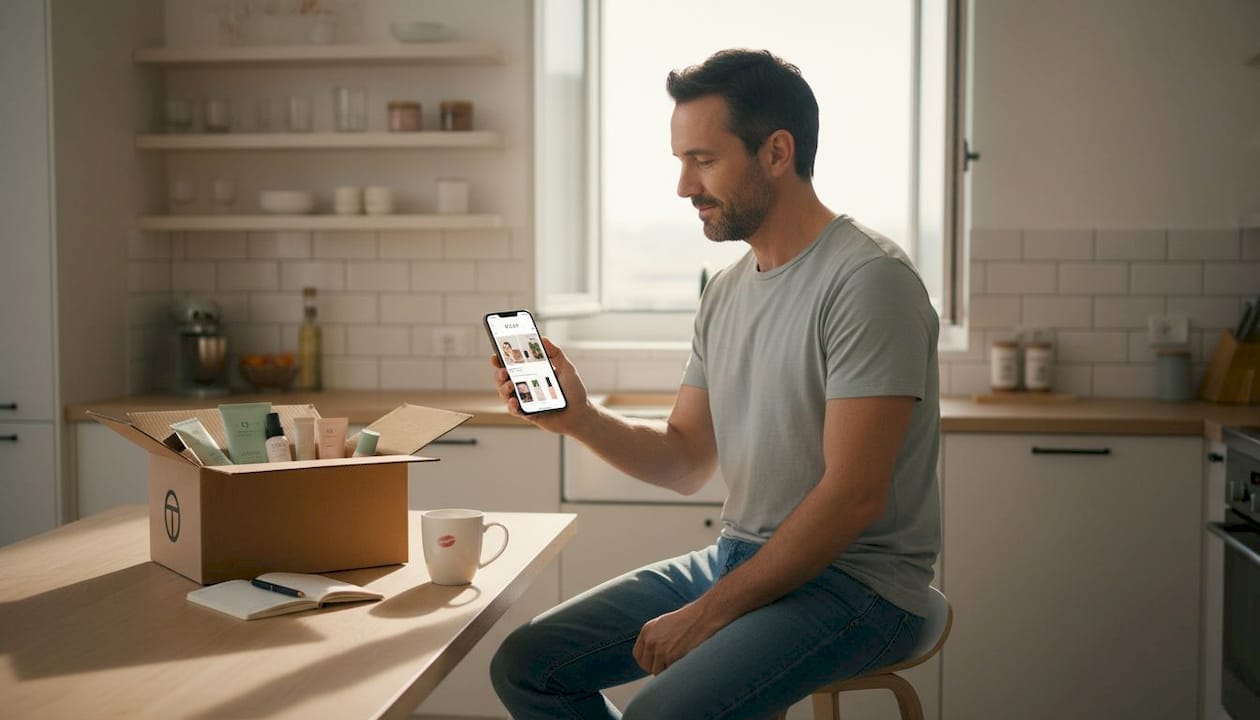
Transparency about ingredients builds trust in beauty. Mention the origin, certifications, and expected results. Add a short video usage guide: conversions systematically increase.
Pro tip: Integrate installment payments (Klarna, Alma) from opening. Installment payments increase the average cart by 20 to 30%, which can transform your profitability on mid-to-high-priced products like premium skincare.
For logistics, 73% of customers abandon their cart because of shipping costs. Offer free shipping from a defined threshold, or include it in your selling price. Announced delivery times must be met: in beauty, repurchase depends as much on the delivery experience as on the product itself.
Marketing Strategies for Launch
Many beauty entrepreneurs invest in production, then discover they have no more budget to acquire customers. Marketing is not a post-launch expense. It is an infrastructure you build at the same time as your store.
Here is a logical order to structure your acquisition:
- Create a pre-launch page with a signup form. Build an email list even before having your site ready. Two hundred qualified subscribers are worth more than 2,000 random views at launch.
- Launch targeted Meta Ads campaigns to test your visuals and messages before committing a large production budget. A €300 test tells you what works. A thousand euros in the production of untested content can be lost.
- Activate Google Shopping from opening. It is the channel where purchase intentions are most direct. A person looking for “organic face cream for sensitive skin” is ready to buy now.
- Produce SEO content about the questions your customers ask. An article on “how to choose your eye contour care” can generate qualified traffic for years. SEO is slow but it builds an audience that belongs to you.
- Rely on authenticity in your storytelling. Transparency and authenticity are key factors in customer loyalty in beauty. The origin of ingredients, organic or natural certifications, the behind-the-scenes of manufacturing: this content builds a lasting relationship with your customers.
Pro tip: Define your key indicators from day 1: mobile conversion rate, cart abandonment rate, and inventory turnover. Without these figures, you are navigating blindly. With them, you know exactly where to act each week.
For the launch marketing budget, plan at least 15 to 20% of your projected revenue. If you aim for €5,000 in sales the first month, invest at least €750 to €1,000 in paid acquisition. The temptation to reduce this budget is strong at the start. It is often the mistake that weighs down the first six months.
Long-Term Financial and Legal Management
A technically performing website can still fail if financial management is approximate. This part is often underestimated in online brand creation guides.
Rigorous management of inventory and cash flow makes the difference between a brand that lasts and one that closes after 18 months. An inventory turnover of six times a year frees up cash flow and allows reinvesting in marketing. A turnover of three times a year immobilizes capital and slows your growth.
European VAT and OSS System
As soon as your sales outside France exceed €10,000, the OSS (One Stop Shop) system becomes mandatory. Many entrepreneurs discover it too late, after accumulating undeclared sales in other European countries. Regularization can cost several thousand euros. Register for the OSS system as soon as you anticipate European expansion.
Cosmetic Standards: No Gray Areas
French and European cosmetic compliance requires going through a ISO 22716 certified laboratory. Artisanal manufacturing at home is strictly prohibited for sale. Each product must have a complete DIP and be notified on the CPNP portal before commercialization.
The most frequent mistakes after launch? Here they are:
- Neglecting the INPI brand renewal (50% surcharge if late)
- Ignoring the OSS system until a tax audit
- Launching promotions without calculating their impact on the margin
- Depending on a single supplier without a backup solution
- Not planning cash flow for the low periods between two inventory cycles
Transparency in the beauty sector is also a commercial obligation. Customers check ingredients, compare labels, read reviews. Honest communication about limitations or delays builds trust more than any marketing argument.
My Experience with These Projects
I have supported dozens of beauty brands since 2018. And I systematically observe the same pattern in projects that fail: too much energy put into the aesthetics of the site, not enough on the underlying structure.
What has struck me the most over the years is that costly mistakes almost never come from the product. They come from a poorly protected name, a marketing budget sacrificed to pay for beautiful packaging, or cosmetic compliance discovered six months after launch.
What I have concretely learned: the brands that last in the first 18 months are those that accepted to spend time and money on the invisible before taking care of the visible. The beauty branding strategy must precede the design of the site, not accompany it in parallel.
The other truth that few guides say clearly: in beauty, credibility is built over time. A certified natural product, a sincere brand story, and authentic customer reviews do more than the best advertising campaign. But this credibility requires time and flawless consistency between what you say and what you deliver.
My advice for the first 18 months: resist the temptation to do everything at the same time. One well-mastered acquisition channel is worth more than five poorly executed channels. And surround yourself with partners who know your sector. Not generalists. Specialists who speak the language of beauty and know what your customers expect.
— Tamara
Tamaragency Supports You at Every Step
Implementing this e-commerce brand creation process guide takes time, precision, and a technical mastery that not all entrepreneurs possess from the start. That is precisely why Tamaragency exists.

Since 2018, we have been creating and redesigning beauty and cosmetic Shopify stores for brands that refuse to look like the competition. Our approach covers strategy, UX/UI, technical development, and monthly performance monitoring. Whether you are starting from scratch or want to redesign an existing store, we offer a solution adapted to your stage of development. Discover all our services for e-commerce brands and let's talk about your project. A site must perform as much as it seduces. We help you achieve both.
FAQ
What budget to plan to launch your online beauty brand?
The initial budget for a simple e-commerce store is between €2,000 and €5,000, excluding stock and marketing. Plan an additional 15 to 20% of your target revenue for customer acquisition from the first month.
Should you register your brand with the INPI before launching your store?
Yes. Registering your brand before launch protects you against infringement and secures your name commercially. The cost is €190 for one class, with a renewal at €290 every ten years.
Is Shopify the best platform for a beauty brand?
Shopify is the platform best suited for ambitious beauty brands thanks to its app store, mobile fluidity, and marketing integrations. WiziShop is a viable alternative for less technical users with strong SEO needs.
What standards apply to cosmetics sold online in France?
Any cosmetic product sold online must be manufactured in an ISO 22716 certified laboratory, have a complete Product Information File, and be notified on the CPNP portal before being placed on sale. Home-based artisanal manufacturing is prohibited for commercialization.
When does the OSS VAT scheme become mandatory?
The OSS scheme becomes mandatory as soon as your sales outside France exceed €10,000 in a year. It allows you to declare VAT in all European countries via a single portal in France, thus avoiding costly regularizations.