

Wellness Boutique Branding Strategy: The Shopify Guide
TL;DR:
- A solid branding strategy is essential to transform a Shopify store into a high-performing wellness brand.
- It must include precise positioning, a distinctive visual identity, and an optimized user experience to build trust and foster customer loyalty.
Your Shopify store is live, your products are excellent, and yet sales are struggling to take off. This scenario is more common than you might think in the wellness and beauty industry. The main cause is rarely the product itself. It is often a non-existent or poorly executed wellness store branding strategy that holds back growth. Mastering your branding is about more than a beautiful logo: it builds trust, strengthens customer loyalty, and directly improves your conversion rates. In this guide, we provide a clear, step-by-step method to transform your store into a brand that attracts customers as effectively as it performs.
Table of Contents
- Prepare your branding strategy before creating or redesigning your store
- Execute a consistent and authentic visual design for your store
- Optimize the Shopify user experience to strengthen your branding and performance
- Monitor results and continuously adjust your branding strategy
- Why avoiding wellness branding clichés guarantees successful differentiation
- How Tamara Agency can help your wellness brand succeed on Shopify
- Frequently asked questions about Shopify wellness store branding strategy
Key Points
| Point | Details |
|---|---|
| Clear strategy | Define your mission, values, and positioning before creating your Shopify store. |
| Authentic visual identity | Avoid wellness clichés and adopt an earthy color palette to stand out. |
| Optimized UX | Improve navigation and personalization to boost conversion and customer loyalty. |
| Continuous measurement | Track key KPIs and adjust your strategy based on customer feedback and sales data. |
| Expert guidance | Working with specialized agencies helps maximize the impact of your branding on Shopify. |
Prepare your branding strategy before creating or redesigning your store
Before touching a single pixel of your store, you must lay the foundation for your brand. This is the step that is most often overlooked and the most costly to correct later.
Define your positioning precisely
Clear positioning answers four questions: Who are you for? What need do you solve? What unique benefit do you offer? What evidence do you have? A wellness brand that answers “we sell natural products” has no positioning. A brand that says “we help busy women aged 30 to 45 reduce visible skin stress with certified adaptogenic formulas” has a solid foundation.
The fundamental pillars to validate before redesigning
Here are the elements to formalize in writing before any design or development work:
- Positioning statement: a sentence that summarizes your unique offering
- Brand values: ideally 3 to 5, non-generic (avoid “quality” and “natural” without evidence)
- Customer persona: fictional name, age, lifestyle, purchasing barriers, wellness aspirations
- Proof of authenticity: certifications, ingredient origins, CSR commitments, testimonials
- Editorial tone: every word published on your store should sound like the same voice
The best practices for e-commerce branding include brand governance, storytelling, and transparency to connect emotionally with your customers. These three elements are not optional: they are the foundation of branding that converts.
How to build your storytelling in 4 steps:
- The origin: why did you create this brand? What personal frustration or conviction motivated you?
- The hero: your customer, not your brand. They undergo a transformation thanks to you.
- The proof: data, certifications, verified reviews, visible before-and-after results.
- The vision: where are you going? What impact do you want to have in 5 years?
Pro tip: Write your storytelling before briefing your designer. A visual brief without a brand narrative produces beautiful but meaningless websites that are unable to create a lasting emotional connection with the buyer.
To deepen your approach, our article on beauty digital strategy will give you concrete ideas to align your branding with your sales goals on Shopify.
Execute a consistent and authentic visual design for your store
With a clear strategy, it is time to create an impactful and distinctive visual identity that reflects your values.
Break away from expected visual clichés
The wellness industry suffers from real visual saturation. White backgrounds, green leaves, lowercase typography, pastel palettes: these choices no longer differentiate anyone. Avoiding visual clichés is now a necessity, with a preference for earthy colors, organic lines, and varied logo formats that ensure multi-channel consistency.
Here is a comparison table to help you calibrate your choices:
| Visual element | Cliché to avoid | Distinctive alternative |
|---|---|---|
| Color palette | Generic pastels, pure white | Terracotta, ochre, moss green, warm brown |
| Typography | Fragile script, ultra-thin sans-serif | Contemporary serif, bold grotesque |
| Imagery | Stock photos of smiling women | Raw editorial photography, textured materials |
| Icons | Leaves, water drops, flowers | Organic geometric lines, abstract shapes |
| Logo | Single centered version | Vertical, horizontal, monogram, distinct favicon |
The golden rules for a solid visual system
- Limit your fonts to two: one for headings, one for body text. Every addition creates inconsistency.
- Check your contrasts: accessibility is non-negotiable. Unreadable text on mobile costs sales.
- Create several logo formats: primary version, condensed version, monogram, and favicon. Every expression surface has its constraints.
- Apply your brand colors everywhere: website, social media, packaging, order confirmation emails.
Pro tip: Create a one-page brand style guide that you and your team can consult before every publication. This prevents visual inconsistencies that dilute your wellness brand image over the long term.
Our team details this approach in our guide on Shopify beauty design, with concrete examples of brands that have made this transformation.
Optimize the Shopify user experience to strengthen your branding and performance
After building a strong visual identity, you must ensure that the user experience reflects this image and boosts conversion.

Why UX is a direct extension of your branding
A slow website, confusing navigation, or a complicated checkout process destroys the perception of your brand faster than any bad review. UX and wellness branding are inseparable. Every friction point on your store tells something about your brand. And it is generally not what you want to tell.
The 5 UX priorities for a high-performing wellness store on Shopify:
- Mobile first: the beauty and wellness audience mostly buys on smartphones. Every element must be designed for a screen less than 400px wide.
- Transparent product pages: complete list of ingredients, origin, certifications, directions for use, and verified reviews. Transparency is a direct conversion factor.
- Simplified navigation: maximum 3 clicks to reach any product. Overloaded menus discourage exploration.
- Smooth checkout: use native Shopify features (Shop Pay, one-click payment) to reduce cart abandonment.
- Data-driven personalization: product recommendations based on history, skin diagnostic quizzes, personalized routines.
The results speak for themselves. The brand La Rosée increased its conversions by 53% and its completed purchases by 88% thanks to optimized navigation and personalization of its Shopify site. In the same vein, Omy Laboratoires improved its sessions by 60% and its recurring orders by 35% after a redesign focused on product pages and personalization.
- Integrate micro-interactions (light hover animations, visual confirmations of adding to cart) to make the experience more lively without slowing down the site.
- Display delivery times and the return policy on the product page, not just in the footer.
- Test your site on an average mobile network (simulated 3G) to detect real slowdown points.
Pro tip: Do not measure only your overall conversion rate. Analyze the conversion rate by product category and by traffic source. A page that converts at 1.2% on organic traffic and at 4.5% on email traffic tells you where to focus your branding and personalization efforts.
To go further, our articles on beauty e-commerce UX and on Shopify conversion via micro-interactions will give you immediately actionable levers.
Monitor results and continuously adjust your branding strategy
Once the actions are implemented, it is key to measure and refine your strategy for lasting success.
Set up a branding dashboard
Many brands measure their sales but not their brand. However, branding has measurable indicators: customer return rate, Net Promoter Score, social media engagement rate, spontaneous mentions, session duration on the site.
KPIs to track monthly:
| Indicator | What it measures | Recommended tool |
|---|---|---|
| Conversion rate | UX effectiveness and product trust | Shopify Analytics |
| Repurchase rate | Customer loyalty and brand attachment | Klaviyo, LoyaltyLion |
| Net Promoter Score | Likelihood of recommendation | Typeform, Gorgias |
| Engagement rate | Content and identity resonance | Meta Business Suite |
| Session duration | Interest in content and navigation | Google Analytics 4 |
Steps to refine your strategy in a structured way:
- Reread your customer reviews every month looking for the words they use to describe your brand.
- Compare these words to your desired editorial tone. The gap is your work area.
- Test a variation of your homepage (CTA color, title wording) for 30 days.
- Train every member of your team on the rules of the brand style guide, including customer service.
- Review your storytelling every quarter in light of your new evidence (new reviews, certifications, partnerships).
The brand NEOM Wellbeing recorded a 34% increase in its checkout conversions and a 10% increase in its order volumes after a Shopify redesign combining a consistent visual identity and a subscription program. On the pharmaceutical side of wellness, Arkopharma strengthened its credibility via a redesign of its visual identity and internal training of 30 people to ensure total communication consistency.
These cases confirm one thing: branding is a measurable investment, not an aesthetic expense. Find other analyses in our article on beauty e-commerce strategies that transform Shopify stores.
Why avoiding wellness branding clichés guarantees successful differentiation
After six years working with beauty and wellness brands on Shopify, we have observed a constant: the brands that perform the best are not those with the biggest budget. They are those that had the courage to be unique.
The wellness industry is a victim of its own success. Demand has exploded, and with it, an avalanche of brands that look alike visually, tell the same stories, and use the same keywords. “Natural”, “holistic”, “taking care of yourself”. These words no longer mean anything to today's buyer.
The real problem with visual clichés is not that they are ugly. It is that they make your brand invisible. When everyone uses green leaves and pastels, visual authenticity becomes the real differentiator, with earthy colors and logo consistency across all formats.
What we advise our clients: adopt a controlled experimental mindset. Test an unexpected brand color on a collection. Publish content that shows the behind-the-scenes of your formulations. Dare to use a bolder typography. Measure. Then decide.
Authentic wellness branding is not a trend. It is a commitment. It requires consistency, a real understanding of your customer, and the willingness to reject aesthetic shortcuts that dilute your identity. The brands that succeed in the long term are those that know exactly what they will not do.
To see how this commitment translates into design, our article on Shopify beauty design illustrates several real transformations.
How Tamara Agency can help your wellness brand succeed on Shopify
You now have a clear vision of what a high-performing wellness store branding strategy requires. Moving from theory to execution requires expertise that we have built since 2018 alongside ambitious brands in beauty, wellness, and cosmetics.

At Tamara Agency, we support brands at every step: from the creation of your custom Shopify store to the complete redesign of your online presence, including strategic advice, UX/UI tailored to industry standards, technical development, and monthly performance monitoring. We also offer Shopify training sessions so that your teams can manage your store with the same level of excellence with which we designed it. Our goal is simple: to help your brand grow sustainably.
Frequently asked questions about Shopify wellness store branding strategy
What are the key steps for a successful branding strategy on Shopify?
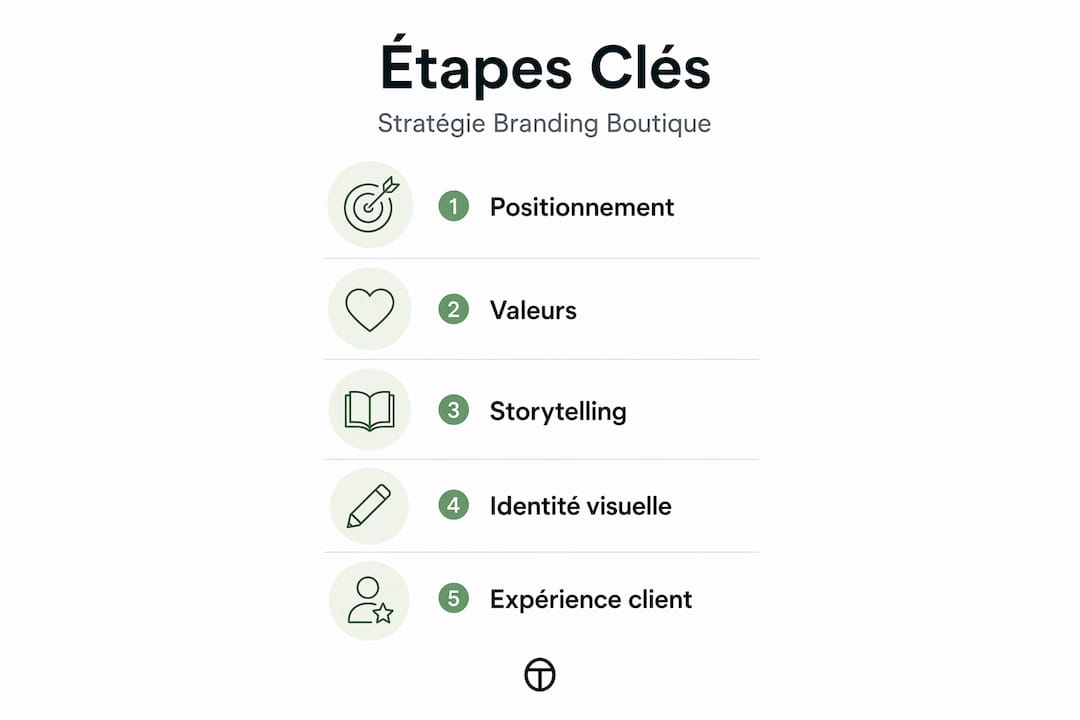
You need to clearly define your positioning and target audience, build authentic storytelling, create a consistent visual identity, optimize your store's user experience, and then continuously measure and adjust. High-performing branding practices rely on brand governance, storytelling, and emotional transparency.
How to avoid clichés in wellness branding?
Opt for earthy colors rather than generic pastels, vary your logo formats (vertical, horizontal, monogram), and build your identity on verifiable values. According to visual identity experts, organic lines and narrative authenticity effectively replace industry clichés.
What gains can we expect from a well-thought-out Shopify redesign?
Results vary by brand, but documented cases speak for themselves: La Rosée saw its conversions increase by 53% and its completed purchases by 88% after a redesign focused on navigation and personalization. A well-executed redesign improves both brand perception and measurable business performance.